Website Migration Services
Migrate Your Website
SEO-Safe Migrations - Every Redirect Mapped, Rankings Kept.
Plan Twice, Migrate Once. Zero Rankings Left Behind.
SEO Site Migration Agency
Every Migration Is a Risk — Our Job Is to Eliminate It
Website migrations go wrong more often than they go right. Research analysing 892 site migrations found an average recovery time of 523 days, with 42% of domain migrations never regaining their original traffic levels and 17% failing to recover even after 1,000 days. Businesses move to a new platform, launch a redesign or change domains and watch their organic traffic drop by 30-60% overnight. Rankings that took years to build vanish because URLs changed without redirects, canonical tags were misconfigured or the new site structure broke the internal linking architecture. Our website migration service prevents that. We plan every detail before anything changes, map every URL, test every redirect and monitor rankings continuously through the transition and beyond.
Based in Birmingham and working with businesses across the UK and internationally, we've managed migrations across WordPress, Shopify, Magento, custom-built platforms, headless CMS setups and framework moves to Next.js development services and Astro. We've handled domain consolidations, HTTP to HTTPS switches, URL restructures and full platform replacements. Our SEO services team is involved from the first planning meeting through post-launch monitoring, because the technical decisions made during migration planning determine whether your organic traffic survives the move.
experience
Quick Navigation


STRATEGY WITHOUT
EXECUTION IS JUST NOISE
Types of migration we manage
- Platform migrationsMoving from one CMS or framework to another. WordPress to Shopify, Magento to headless, legacy CMS to modern Jamstack. URL structures almost always change, which is where most SEO damage occurs.
- Domain changesRebranding with a new domain name. All authority, backlinks and rankings need to transfer cleanly through 301 redirects and Google Search Console domain change notifications.
- Site redesignsVisual and structural overhauls that change URL patterns, page hierarchy or content organisation. Even if the domain stays the same, a redesign can devastate rankings if SEO isn't part of the planning.
- HTTPS migrationsMoving from HTTP to HTTPS. While Google recommends HTTPS, the migration itself can cause temporary ranking fluctuations if redirect chains, canonical tags and internal links aren't updated correctly.
- Domain consolidationsMerging multiple websites onto a single domain. Common during acquisitions, brand consolidations or eliminating microsites. Each source domain's authority needs to be transferred systematically.
- URL restructuresChanging URL patterns without changing platforms. Often needed to improve site architecture, but every changed URL needs a mapped redirect to preserve rankings and link equity.
TECHNOLOGIES & PLATFORMS
Search Engine Optimisation














The SEO migration process that protects your rankings
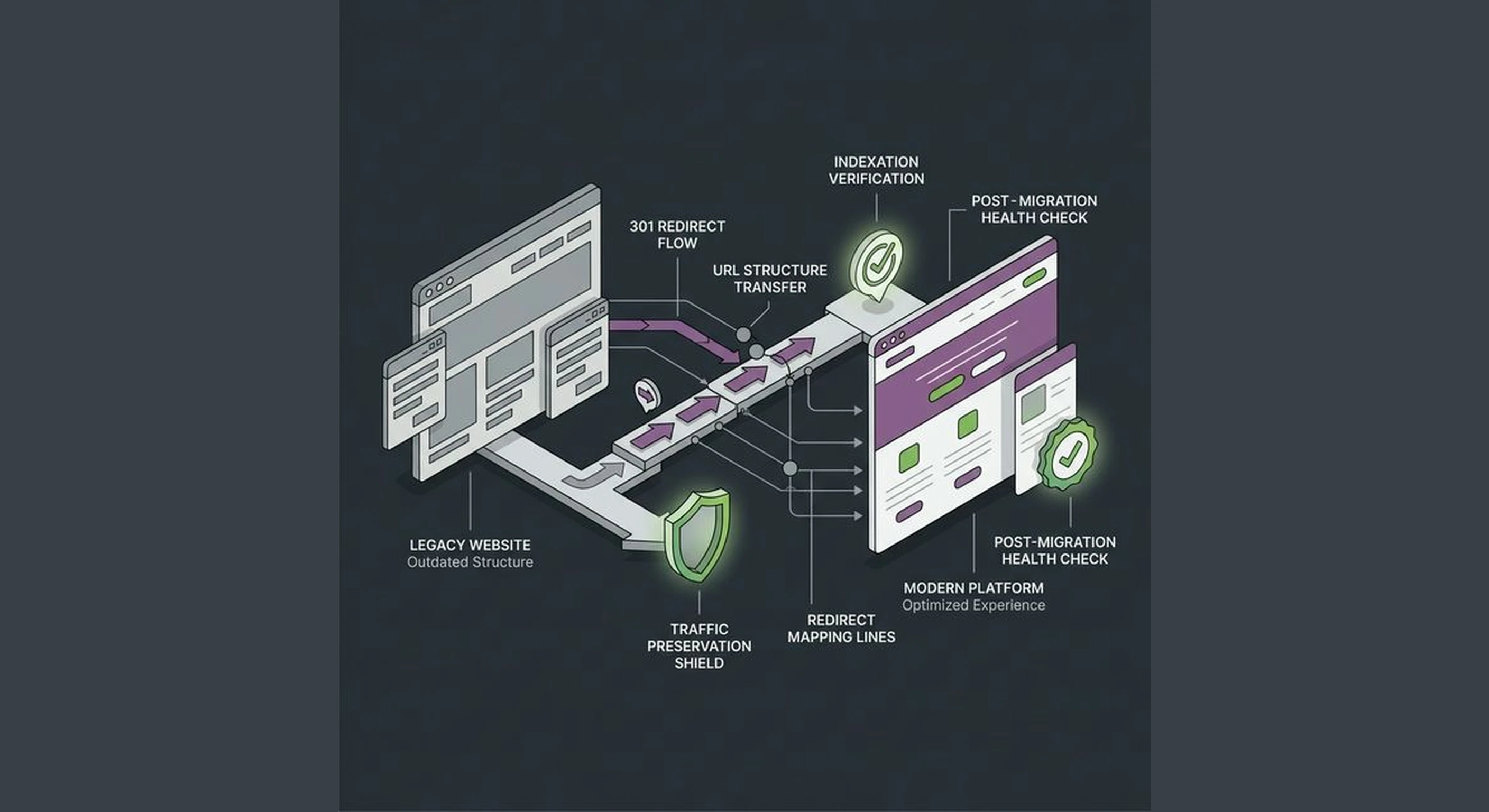
Our migration process is deliberately methodical because the cost of getting it wrong is severe. Before any changes go live, we complete a full pre-migration audit. This includes crawling every page of the existing site, documenting every URL, cataloguing every inbound backlink, recording current keyword rankings for all tracked terms and mapping the existing internal linking structure. This baseline data is what we measure against after launch to verify nothing was lost.
Next, we build the redirect map: a URL-by-URL document that specifies where every old page redirects to on the new site. Pages that have a direct equivalent get 1:1 redirects. Pages that don't have an equivalent are redirected to the most relevant alternative. No page returns a 404 unless it genuinely has no value and no backlinks. We test every redirect on a staging environment before launch, checking for chains, loops and incorrect destinations. On launch day, we verify redirects are working, resubmit sitemaps, monitor crawl errors in Search Console and track rankings daily for the first four weeks. Clients who've experienced failed migrations elsewhere tell us this level of detail is exactly what was missing the first time around.

Post-migration monitoring and recovery
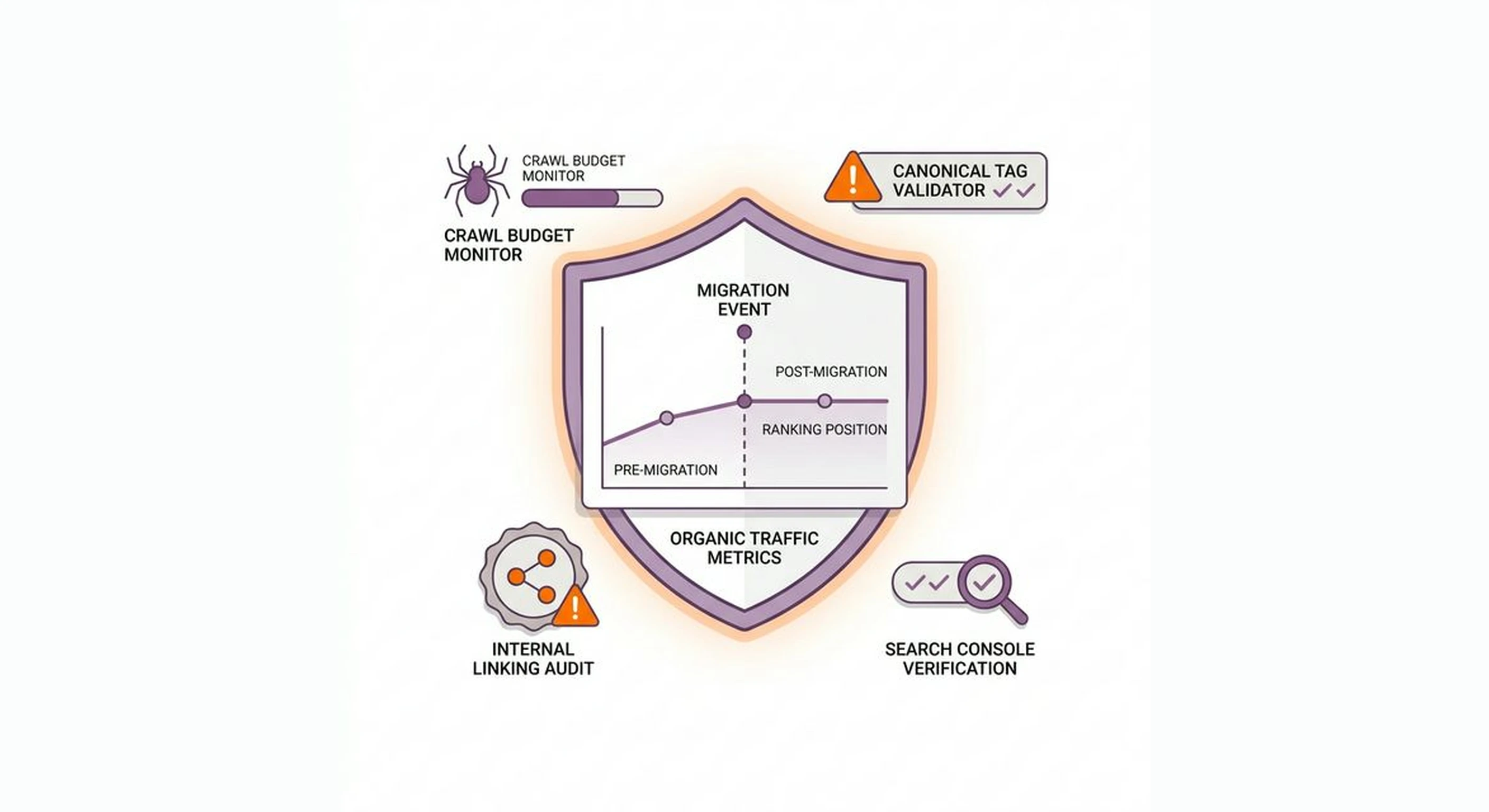
Even a well-planned migration causes temporary ranking fluctuations. Google needs time to recrawl and reprocess your site. The difference between a good migration and a bad one is whether those fluctuations are small and temporary or large and permanent. We monitor daily for the first 30 days after launch: tracking rankings, crawl errors, indexation rates, organic traffic and redirect performance.
If we spot issues, we fix them immediately. Missed redirects, unexpected 404s, canonical tag errors, rendering problems on the new platform or slow page load times that affect Core Web Vitals. All of these can appear post-launch even with thorough planning. Our monitoring catches them within hours, not weeks. For clients who come to us after a migration has already gone wrong, we offer migration recovery services: diagnosing what broke, implementing fixes and rebuilding the organic visibility that was lost. Recovery is always harder and slower than prevention, which is why we recommend involving our SEO audit team before the migration begins.
Sectors
We've Engineered Growth
Across Every Sector.
From bootstrap to boardroom, we've seen it all. And we make growth inevitable.
View All SectorsCharity & Non-Profit
Impactful, user-friendly websites that help charities and non-profits raise awareness and grow support.
Arts & Creative
Visually stunning portfolio sites that let artists, designers, and creatives showcase their work beautifully.

Engineering & Industrial
Specialised digital for engineering firms, manufacturing, and heavy industry.

IT & Technology
SEO, web design, and marketing for SaaS, IT services, and tech companies.

Healthcare & Medical
GDPR-compliant websites and patient-focused marketing for healthcare providers.
Financial Services
Trusted web design and marketing services for financial advisors and firms.

Manufacturing
Driving leads and visibility for UK manufacturers with targeted digital strategies.
Education & Schools
Engaging websites and visibility for schools, universities, and education providers.

Home & Garden
Beautiful eCommerce and brochure websites for home, garden, and lifestyle brands.

Food & Beverage
Appetising websites and online marketing for restaurants, food brands, and hospitality.
Logistics & Transport
High-performance websites for logistics, haulage, and transport companies across the UK.
B2B & Professional Services
Websites and marketing services for consultancies, legal firms, and service providers.

SELECTED SEO WORK
Clients First.
Always.
We work smartly and ethically to provide intelligent and cost-effective solutions that maximise your ROI and fuel business growth.




Reviews & Testimonials
See What Our Customers Say
Opace are rated 4.95/5 for SEO based on 57 customer reviews





Local, National & Global Brands
Organisations We've Worked With












Real Results for Real Businesses
Here's what we've achieved for some of our long-standing clients through our SEO and eCommerce services.
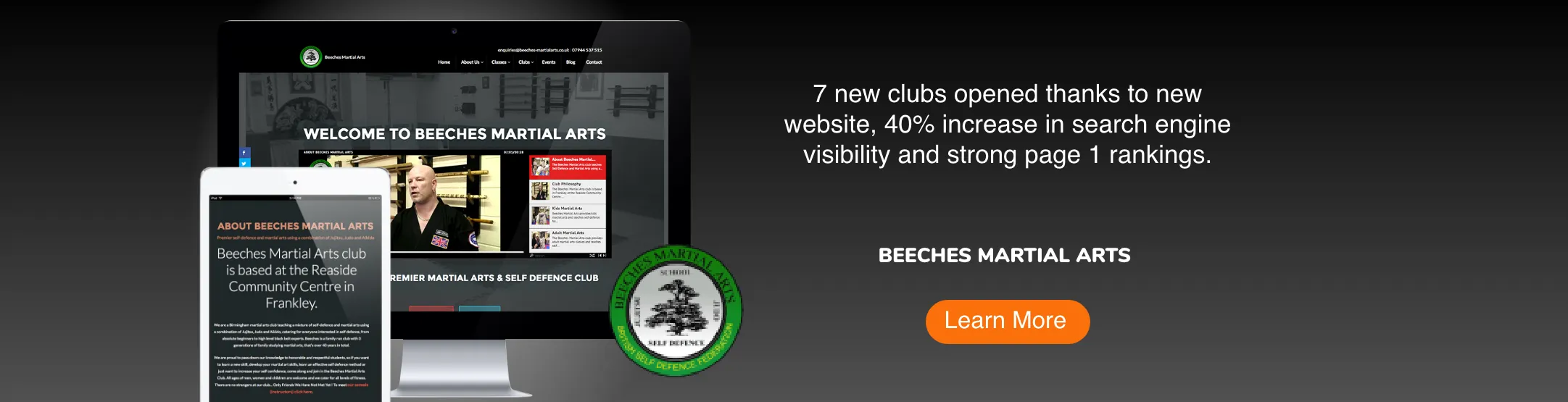
- Page 1 for Sheds competing with 877M results
- No. 1 for Potting Sheds, Pent Sheds and many more
- Ranking for 50+ new keywords

- Page 1 for Beds competing with 22M results
- Page 1 for Corner Sofas, Wardrobes and many more
- Ranking for 170+ new keywords
- Page 1 for Pneumatic Drills competing with 22M results
- Page 1 for Paint Buckets, Fibreglass Filler, Sanding Machine
- And many more keywords driven to the top
SEO CASE STUDY
Home & Furniture Retailer: A Case Study
This home & furniture came to Opace in August 2020 for SEO services. In less than 3 years, we've experienced some exceptional growth and results together! Using a mixture of strategies, including keyword research, content creation, speed and user-experience optimisation, infographic creation, online PR and blog outreach, it has been a truly collaborative approach to eCommerce SEO.
View Full Case Study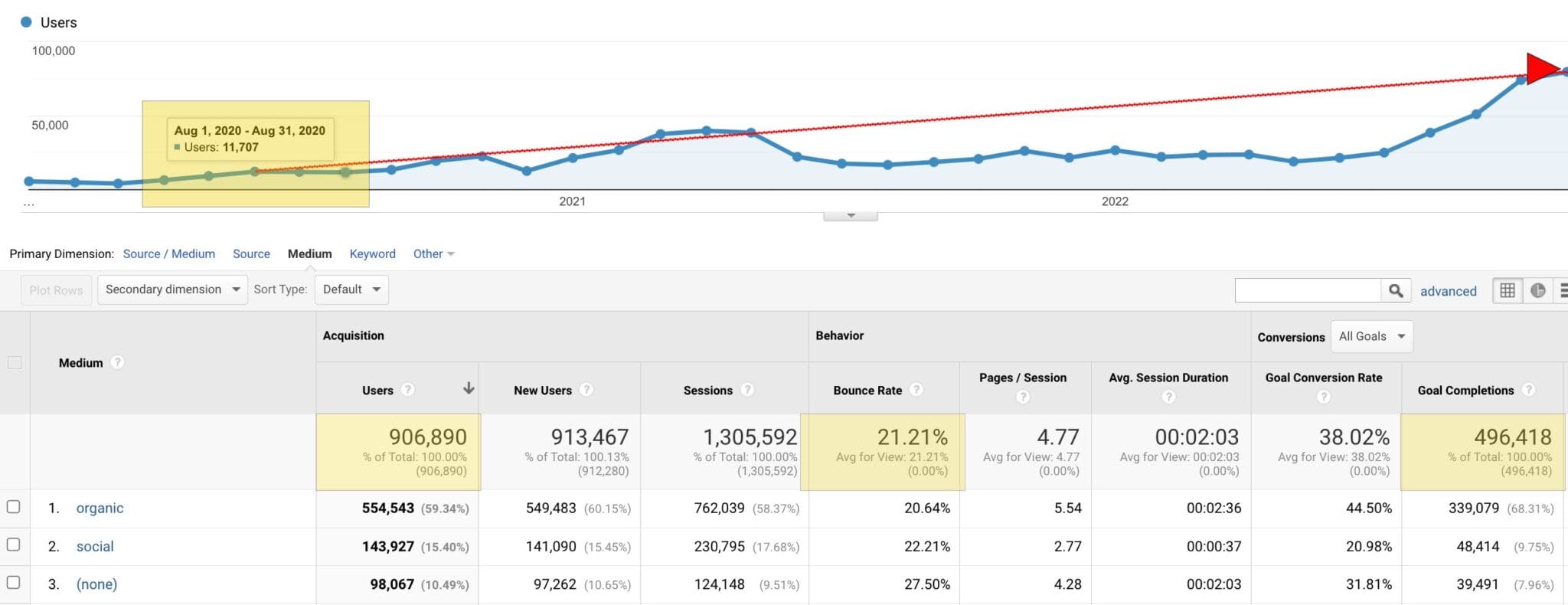
SOME OF OUR AGENCY CERTIFICATIONS
Award Winning Digital Agency
We make sure our digital marketers and specialists are always up to speed. From Google to HubSpot and Semrush, we've completed many of the major certifications available.
WEBSITE MIGRATION SERVICES UK
Why Businesses Trust Our Migration Process
A website migration is one of the highest-risk activities in digital marketing. Every URL change, platform switch or domain move is an opportunity for Google to lose track of your pages, your backlinks and your rankings.
Most migration failures happen because SEO was an afterthought. Our process puts search performance at the centre of every migration decision, from the first planning meeting to the final post-launch sign-off.
Pre-migration baseline data
We crawl and document every URL, backlink, keyword ranking and traffic metric before anything changes. This baseline is what we measure success against and what lets us spot issues immediately post-launch.
1:1 redirect mapping
Every old URL is paired with its correct new destination. No blanket redirects to the homepage. No skipped pages. Each redirect is tested on staging before launch to verify it works correctly.
Platform-agnostic expertise
We've managed migrations across every major CMS and eCommerce platform. The principles are the same regardless of platform; the implementation details differ, and we know the quirks of each.
Daily post-launch monitoring
30 days of daily monitoring covering rankings, crawl errors, indexation, redirect performance and organic traffic. Issues are flagged and fixed within hours, not discovered weeks later.
Migration recovery capability
If you've already experienced a failed migration, we diagnose the damage, implement fixes and work to recover lost rankings. Recovery is harder than prevention, but we've done it successfully many times.
Integrated with development teams
We work directly with your developers, the new platform vendor or our own web development team. SEO requirements are documented as technical specifications, not vague recommendations.
Why Choose Opace for Website Migrations?
If your business is planning a platform change, redesign or domain move, these are the questions worth asking any migration agency before you commit.
What makes your approach different from other agencies?
Most agencies treat migration as a development task. We treat it as an SEO project with development components. That means SEO considerations drive every technical decision, from URL structure to content hierarchy.
Can you handle migrations with tight deadlines?
We can accelerate timelines when needed, but we won't skip the redirect map, staging tests or baseline data collection. Those steps are non-negotiable. We'd rather push back on a deadline than let you launch with gaps.
How do you coordinate with our web developers?
We provide detailed technical specifications covering URL patterns, redirect rules, canonical tags, sitemap requirements and rendering requirements. For clients using our development team, coordination is built into the project plan.
What about content that exists on the old site but won't be on the new one?
Pages with search traffic or backlinks get redirected to the most relevant alternative on the new site. Pages with no traffic, no links and no value can be retired with 410 (gone) status codes rather than redirects.
Do you handle international site migrations?
Yes. International migrations add hreflang mapping, multi-market URL structures and language-specific redirect maps. They're more complex, but the same principles apply at a larger scale.
How soon after launch can we expect rankings to stabilise?
Most well-executed migrations see rankings stabilise within 2-4 weeks. Some fluctuation during the first week is normal as Google recrawls and reprocesses. Our monitoring ensures we catch and fix any issues before they cause lasting damage.
How much does a website migration service cost?
Costs depend on the size of the site, the type of migration and the complexity of the redirect mapping. A small site migration (under 100 pages) typically costs £2,000-£4,000. Larger sites with thousands of pages and complex URL structures scale accordingly. Contact us for a scoping conversation.
Will we lose rankings during a migration?
Some temporary ranking fluctuation is normal as Google recrawls and reprocesses your site. A properly planned migration minimises this to a brief dip of 1-3 weeks. Poorly planned migrations can cause ranking losses of 30-60% that take months to recover from. Our process is designed to prevent the latter. For further guidance, see Screaming Frog SEO Spider.
How long does a migration take to plan?
Planning typically takes 2-6 weeks depending on site size and complexity. Small sites with straightforward URL structures need less time. Large eCommerce sites with thousands of product pages, complex category structures and multiple markets need more. We always finish planning before anything goes live.
What is a redirect map?
A redirect map is a document that specifies where every URL on the old site should redirect to on the new site. Each old URL is paired with its equivalent new URL and assigned a 301 (permanent) redirect. This preserves link equity and prevents users and search engines from landing on dead pages.
Can you fix a migration that's already gone wrong?
Yes. We offer migration recovery services for sites that experienced traffic drops after a poorly executed migration. The process involves auditing what went wrong, implementing missing redirects, fixing technical errors and rebuilding lost visibility. Recovery takes longer than prevention, but we've successfully restored rankings for clients who lost 40-60% of organic traffic.
Do you work with all CMS and eCommerce platforms?
Yes. We've managed migrations involving WordPress, Shopify, Magento, WooCommerce, BigCommerce, Umbraco, Drupal, custom-built platforms and modern frameworks like React development services, Next.js and Astro.
How do you handle large eCommerce migrations?
Large eCommerce migrations require product-level redirect mapping, category structure planning, faceted navigation review and product feed updates. We use automated crawling and redirect matching for catalogue-scale sites, with manual review for high-value pages.
What monitoring do you do after launch?
Daily monitoring for 30 days: keyword rankings, crawl errors, indexation rates, redirect chains, 404 errors, Core Web Vitals and organic traffic. We compare against pre-migration baseline data and address any issues immediately. For further guidance, see Screaming Frog SEO Spider.
Should SEO be involved before the new site is built?
Absolutely. SEO should be involved from the first planning meeting. Decisions about URL structure, information architecture, page templates and content migration all affect search performance. Involving us after the new site is built limits what we can protect. For further guidance, see Google site migration guide.
With all the risks, is website migration still worth it?
Yes, when the reasons are right. Migrating to a faster, more secure or more flexible platform improves long-term performance, user experience and conversion rates. The risk comes from poor planning, not from the migration itself. Businesses that outgrow their existing platform, need better mobile performance or want to consolidate fragmented systems almost always benefit from a well-executed migration.
Can I carry out a website migration myself?
Technically, yes. Practically, the risk is high unless you have deep SEO expertise. The most common DIY migration mistakes are missing redirects, broken canonical tags, orphaned pages and failing to update internal links. These issues often don't surface until weeks later when traffic has already dropped. If your site generates meaningful organic traffic, professional migration support pays for itself by protecting that revenue.
Can you visit our offices if needed, even outside the Midlands?
Yes. We're Birmingham-based but manage migrations for businesses across the UK and internationally. Migration planning and monitoring are entirely remote.
FROM THE BLOG
Our Latest SEO Insights

ChatGPT vs Gemini vs Bing: The Best AI Search Engines and What Comes Next
Compare the best AI search engines of 2026, including ChatGPT, Gemini, Perplexity and Copilot. How AI Overviews and GEO are changing search.
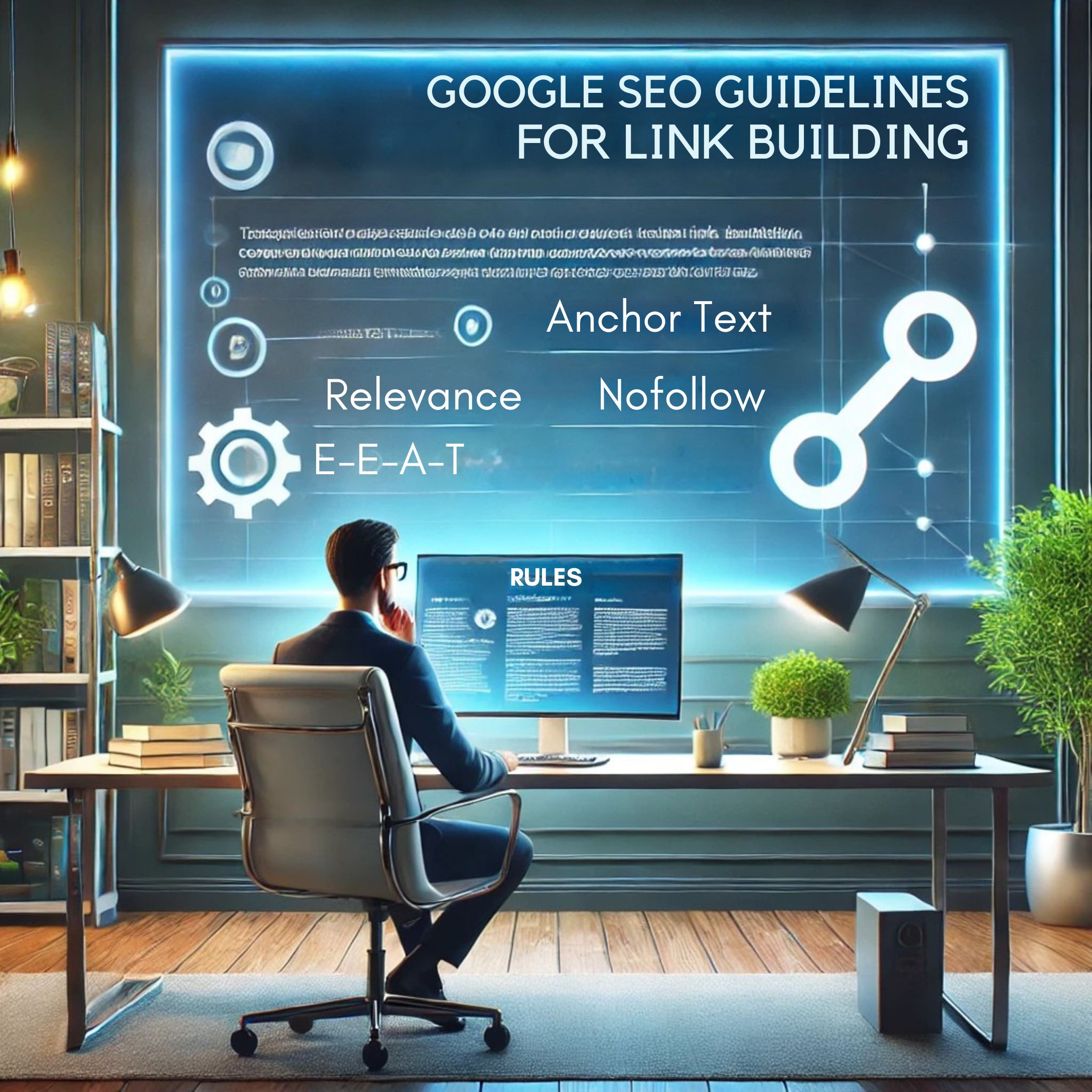
Google’s SEO Rules & Guidelines for Link Building
Want to stay compliant with Google SEO rules and guidelines for link building? Learn about Google’s SEO recommendations and best practices in one place.
![How to Get Free Backlinks for Your Website: Our Top 15 Methods [UPDATED]](/images/wp-content/uploads/2017/04/fix-broken-links-for-backlinks.jpg)
How to Get Free Backlinks for Your Website: Our Top 15 Methods [UPDATED]
Wondering how to get free backlinks for your website? They are an important part of SEO, but if Google says you can’t pay for them, how do you get them?
Get in Touch
Interested in Working with Us?
We have 100% happy customers, so don't delay. Get in touch today and see how we can help.
SEND US A MESSAGE