Example Consultancy Aconsultancy-a.example1
Business planning and growth advice
Business advice, planning and consultancy services.
Jamstack Development - Pre-Rendered, CDN-Delivered, Fast.
No Database Queries. No Server Wait. Just Instant Pages.
Traditional websites generate every page on request. A visitor clicks a URL, a web server queries a database, assembles the page from templates and plugins, and sends it to the browser. Every request repeats that process. It's slow, resource-intensive and creates security vulnerabilities at every layer. Jamstack development services eliminate that entire runtime chain. Pages are pre-built during a build step and deployed as static HTML to a global CDN. When a visitor requests a page, the nearest edge server delivers the pre-rendered HTML instantly. No database. No server processing. No waiting.
Our Birmingham-based development team builds Jamstack sites for businesses across the UK and internationally using frameworks including Astro, Next.js, Nuxt, Gatsby and Eleventy. We've built corporate websites, documentation portals, eCommerce storefronts and multi-language marketing sites that consistently score 95-100 on Lighthouse performance metrics. The speed advantage isn't marginal: our Jamstack builds typically load 2-5x faster than equivalent WordPress or Drupal sites. Combined with our headless CMS development services, content teams get an intuitive editorial interface while visitors get pages that load before they've finished blinking. Our own website is built on this architecture using Astro development, which gives us first-hand proof of the performance, security and maintainability benefits.
Quick Navigation



We understand your customers, what you offer and what you want your website to achieve.
Your next Jamstack website
Built with a Jamstack architecture
A clear Jamstack publishing workflow for your team





























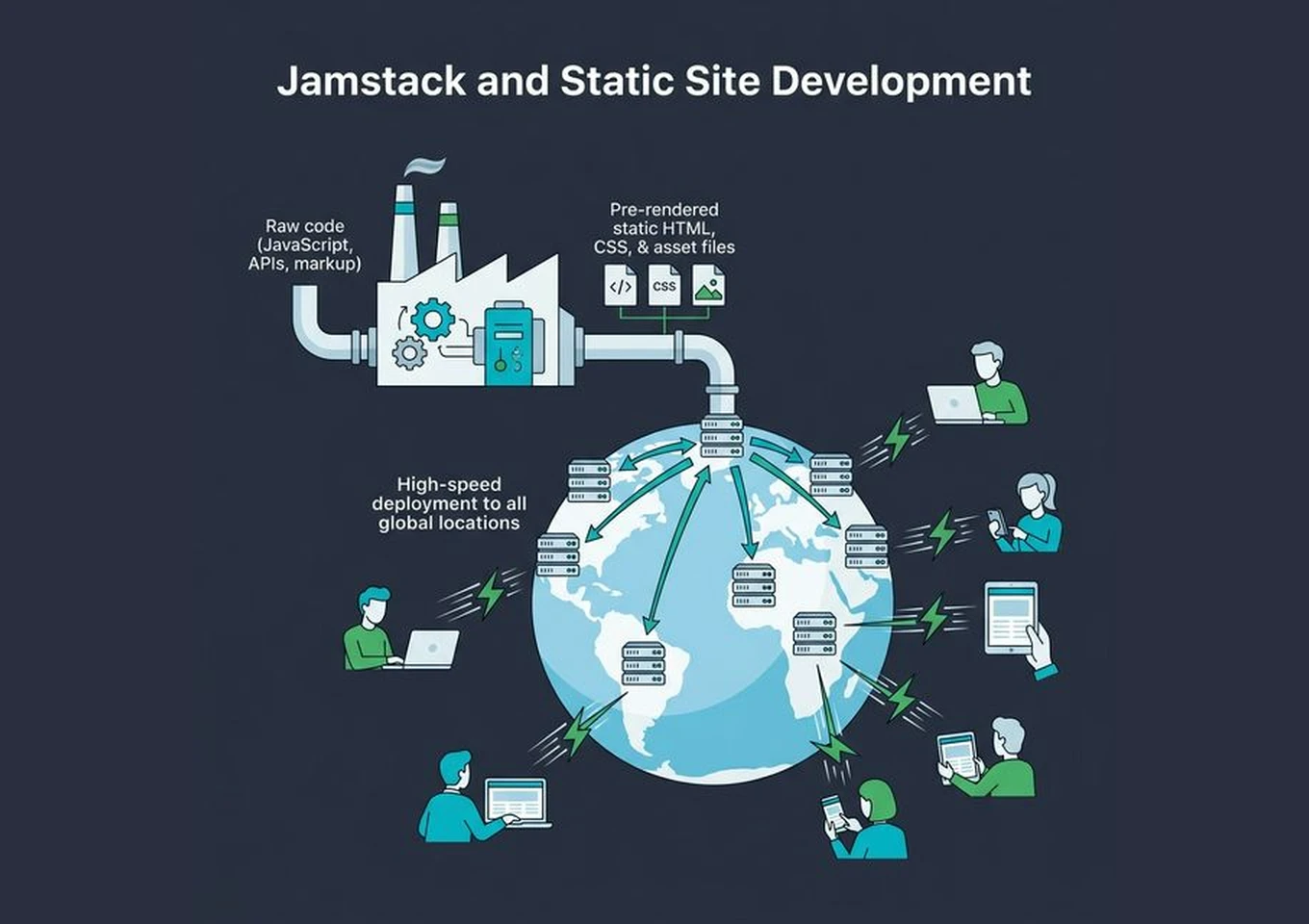
The performance advantage of Jamstack is architectural, not cosmetic. Traditional CMS platforms like WordPress execute PHP, query MySQL databases and assemble pages from dozens of plugins on every request. Even with caching, that runtime overhead creates a performance ceiling. Jamstack eliminates the runtime entirely. Pages are pre-built HTML files served from the nearest CDN edge server. There is no database to query, no PHP to execute, no plugin chain to process. The result is Time to First Byte (TTFB) measured in single-digit milliseconds globally, not the 200-500ms typical of traditional CMS hosting.
Security is equally improved. Traditional CMS platforms present a large attack surface: database credentials, admin panels, plugin vulnerabilities, file upload exploits. Jamstack sites have no database, no admin panel on the production server and no runtime code execution. The attack surface shrinks to the CDN itself, which is managed by specialist infrastructure providers with dedicated security teams. For our SEO services clients, Jamstack's speed advantage directly impacts Core Web Vitals scores, which are confirmed Google ranking factors. Faster sites rank better, convert better and provide better user experiences. Our web design services team has seen clients achieve 20-40% improvements in page speed scores simply by migrating from WordPress to Jamstack architecture.
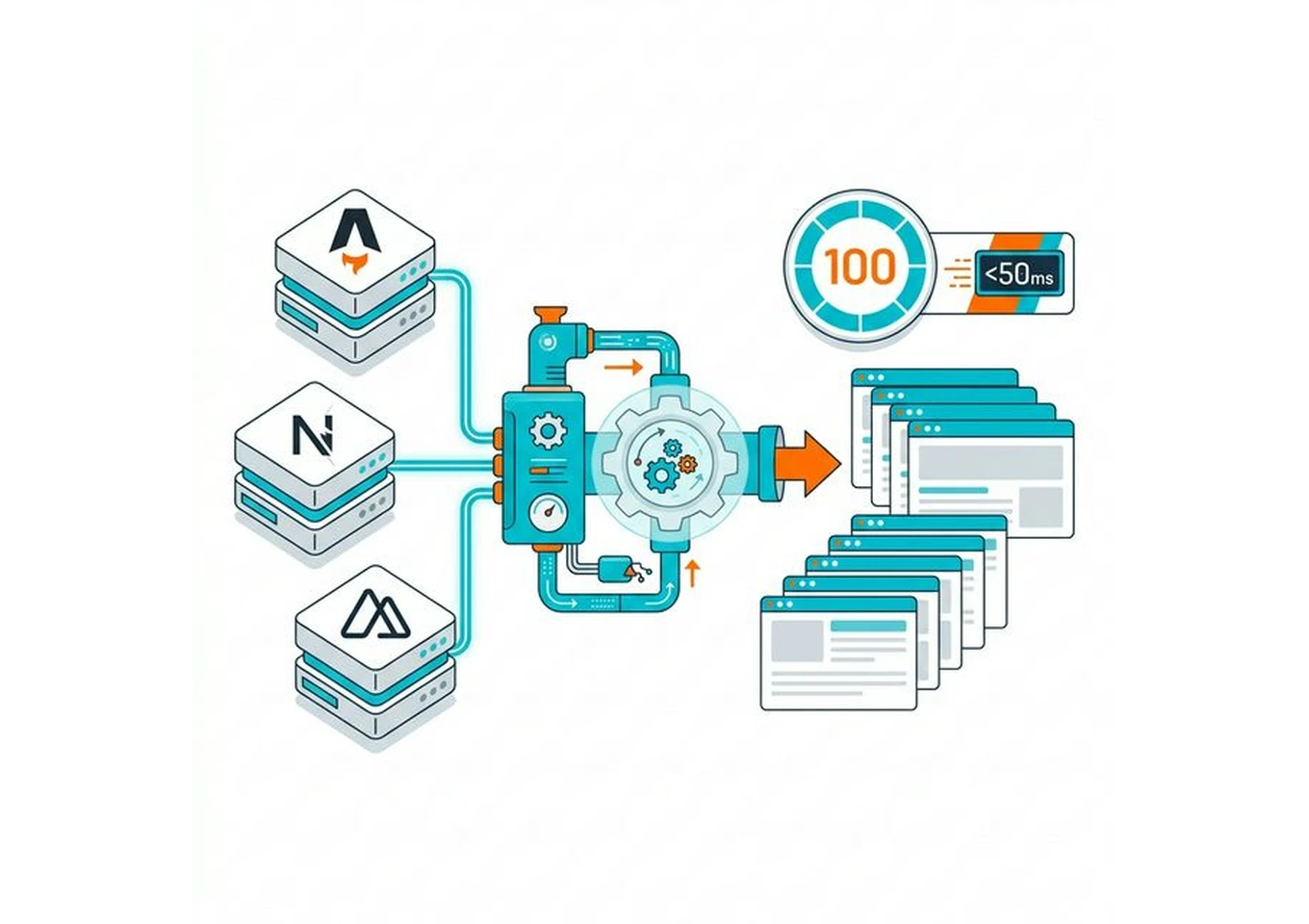
Astro excels for content-heavy marketing sites and documentation portals. It ships zero JavaScript by default, produces the smallest possible page weight, and supports island architecture for adding interactivity only where needed. Next.js is the strongest choice for applications that need server-side rendering, API routes and complex client-side interactivity alongside static pages. Nuxt provides a similar capabilities for Vue-based teams. Gatsby still powers many large content sites, though its build times at scale have pushed teams towards alternatives.
Eleventy is a minimalist option that works with any templating language and produces extremely clean output. SvelteKit offers an innovative approach for teams who value small bundle sizes and compile-time optimisation. Our recommendation always starts with your requirements: content volume, update frequency, interactivity needs, team skills and performance targets. We build proof-of-concept prototypes when the decision isn't clear-cut, testing real page speed, build times and editorial workflows before committing to a full build. For the majority of content and marketing sites, Astro and Next.js are the frameworks we recommend most frequently, though the right answer depends entirely on your project.
From bootstrap to boardroom, we've seen it all. And we make growth inevitable.
View All SectorsImpactful, user-friendly websites that help charities and non-profits raise awareness and grow support.
Visually stunning portfolio sites that let artists, designers, and creatives showcase their work beautifully.

Specialised digital for engineering firms, manufacturing, and heavy industry.
SEO, web design, and marketing for SaaS, IT services, and tech companies.

GDPR-compliant websites and patient-focused marketing for healthcare providers.

Trusted web design and marketing services for financial advisors and firms.

Driving leads and visibility for UK manufacturers with targeted digital strategies.

Engaging websites and visibility for schools, universities, and education providers.

Beautiful eCommerce and brochure websites for home, garden, and lifestyle brands.
Appetising websites and online marketing for restaurants, food brands, and hospitality.

High-performance websites for logistics, haulage, and transport companies across the UK.

Websites and marketing services for consultancies, legal firms, and service providers.

We work smartly and ethically to provide intelligent and cost-effective solutions that maximise your ROI and fuel business growth.
Operating for over a decade, Opace has strived for complete customer satisfaction,
rated 4.92/5 for Web Design & Development based on 62 customer reviews.





















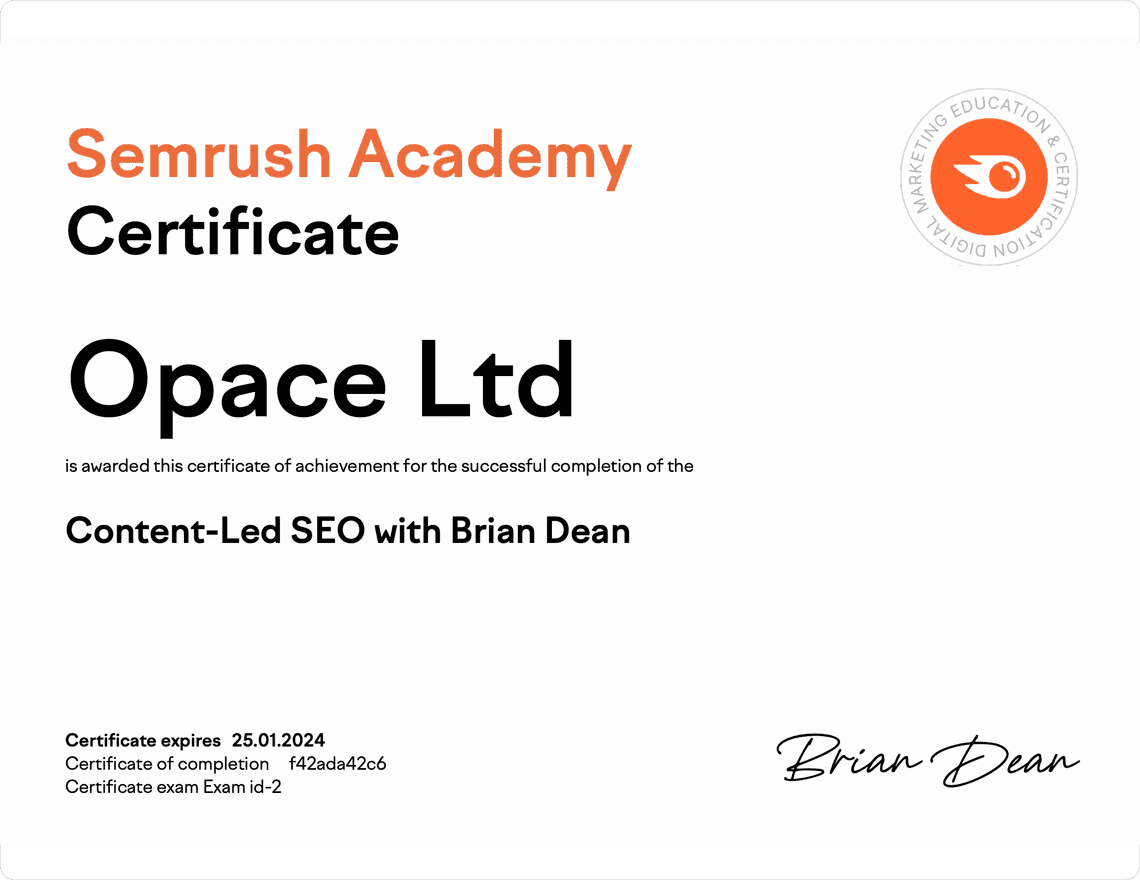
SOME OF OUR AGENCY CERTIFICATIONS
We make sure our digital marketers and specialists are always up to speed. From Google to HubSpot and Semrush, we've completed many of the major certifications available.


JAMSTACK DEVELOPMENT AGENCY
Jamstack is an architecture choice, not a trend. It suits some projects brilliantly and others poorly. Agencies that push it for everything are selling a solution, not solving a problem.
We assess whether Jamstack is the right fit for your project before writing a line of code. When it is, we build it properly. Content modelling, build pipeline, editorial workflows and deployment all receive equal attention.
We start with your requirements, not our preferred framework. Content volume, update frequency, interactivity needs and team skills all influence whether Jamstack is the right choice. When it is, the framework selection follows logically from the requirements.
Jamstack performance depends on well-configured build pipelines. We optimise build times, implement incremental regeneration, configure preview deployments and set up continuous deployment from Git. The build process is invisible to editors but critical to the developer and editorial experience.
Our builds ship minimal JavaScript, serve optimised images, pre-render all pages and deploy to global CDNs. Lighthouse scores of 95-100 are not aspirational targets; they are our baseline. Performance is designed in from the first commit.
Editors don't care about your build pipeline. They care about creating content quickly and seeing it published reliably. We invest in editorial preview systems, clear publishing workflows and training that makes content teams productive, not frustrated.
Static pages load and work without JavaScript. Interactive features enhance the static base through island architecture and client-side hydration. This means pages are accessible, crawlable and usable even when JavaScript fails.
We run our own website on Jamstack architecture. We've seen the build times, the deployment edge cases, the content model decisions and the hosting trade-offs from the inside. That operational experience informs every client project.
If you're evaluating Jamstack agencies, these practical considerations will help you assess whether the architecture fits your project and whether the agency fits your team.
Jamstack development projects typically range from £5,000-£25,000+ depending on complexity, framework choice, content volume and integration requirements. Ongoing hosting costs are typically £10-£100 per month on platforms like Netlify or Vercel, significantly lower than traditional hosting. Get in touch for a detailed proposal.
Jamstack stands for JavaScript, APIs and Markup. It's a web architecture where pages are pre-built as static HTML during a build process and served from a CDN. Dynamic functionality (forms, search, authentication) is handled by serverless functions and third-party APIs. The result is websites that are extremely fast, secure and scalable. See jamstack.org for the official specification.
Yes. Jamstack sites with tens of thousands of pages are common. Incremental static regeneration (ISR) allows individual pages to be rebuilt without regenerating the entire site, keeping build times manageable even at scale. eCommerce sites, documentation portals and publisher websites all work well at scale.
Absolutely. Jamstack uses serverless functions and APIs for dynamic features. Contact forms, site search, user authentication, payment processing, real-time data and personalisation all work seamlessly. The static HTML provides the shell; APIs provide the dynamic behaviour.
Content is managed through a headless CMS like Strapi, Contentful or Sanity. Editors use a familiar web-based interface to create and update content. Publishing triggers an automatic rebuild and deployment. The editorial experience is comparable to WordPress, often better.
Yes, significantly. Pre-rendered HTML pages are immediately crawlable by search engines. Fast page loads improve Core Web Vitals scores, which are confirmed Google ranking factors. Our SEO services team consistently sees improved rankings when clients migrate from traditional CMS to Jamstack architecture.
Yes. We regularly migrate WordPress sites to Jamstack. Content is moved to a headless CMS (or headless WordPress), the frontend is rebuilt using a modern framework, and redirects ensure no SEO value is lost. Our migration services handle the entire process.
Netlify, Vercel and Cloudflare Pages are our primary recommendations. All provide global CDN distribution, automatic deployments from Git, serverless functions and free or low-cost plans. We select based on your serverless function requirements, edge computing needs and team preferences.
Our Jamstack builds consistently achieve sub-1-second page loads and Lighthouse scores of 95-100. Time to First Byte (TTFB) is typically 10-50ms globally from CDN edge servers, compared to 200-500ms for traditional server-rendered sites. The speed difference is architectural, not incremental.
Yes. Our development team is Birmingham-based but we build Jamstack sites for clients across the UK and internationally. Development is managed through version control and modern collaboration tools. Our own website runs on Jamstack infrastructure, proving the approach at scale.
FROM THE BLOG
![ChatGPT: A 2023 Tipping Point To Rival the Internet in 1983, but is OpenAI’s ‘o1’ Model the Largest AI Inflection Point Yet ? [UPDATED]](/.netlify/images?url=%2Fimages%2Fwp-content%2Fuploads%2F2023%2F03%2FThe-future-of-AI.jpg&w=800&q=85)
When significant technological breakthroughs happen, we only appreciate their significance in hindsight.
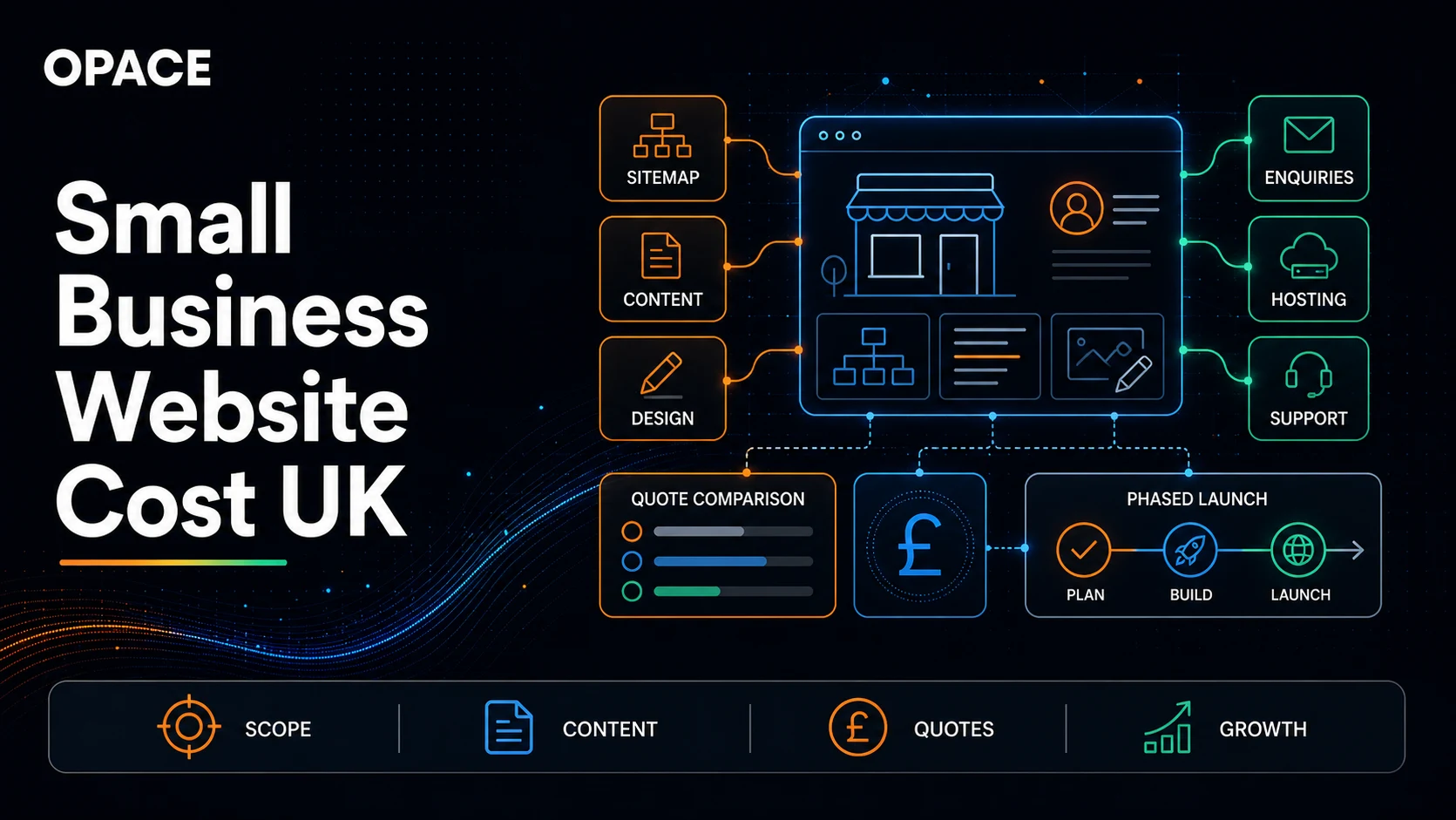
Compare small business website costs in the UK, realistic project scopes, supplier routes, quote inclusions and one-, three- and five-year budgets.
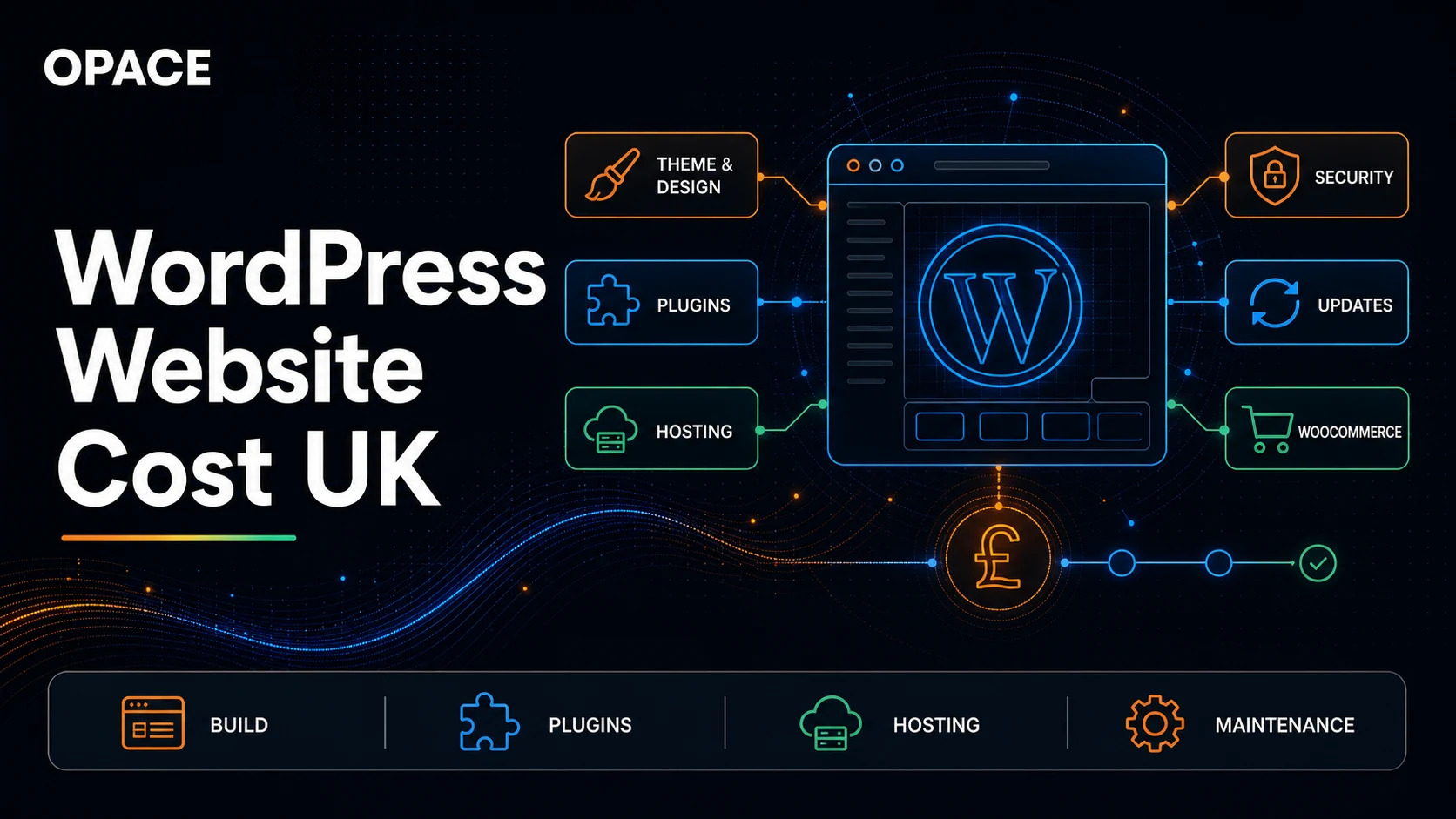
WordPress website cost UK guide covering setup, hosting, themes, plugins and support. Compare build scope, renewals and long-term ownership costs.
Get in Touch
We have 100% happy customers, so don't delay. Get in touch today and see how we can help.
SEND US A MESSAGE