Get in Touch
← All projects

Client case study

NatureSpot Website Redesign

A clearer, wildlife-led Drupal experience for discovery, identification and recording

2026 Charity & Non-ProfitSustainability & Environment

Project highlights

NatureSpot project overview
7
Priority page templates redesigned
4
Visitor journeys: Discover, Identify, Record and Donate
Drupal
Existing platform and recording integrations retained

In their words

We really like the overall design.
NatureSpot project teamFeedback on the first homepage concept

Four clear routes through a complex resource

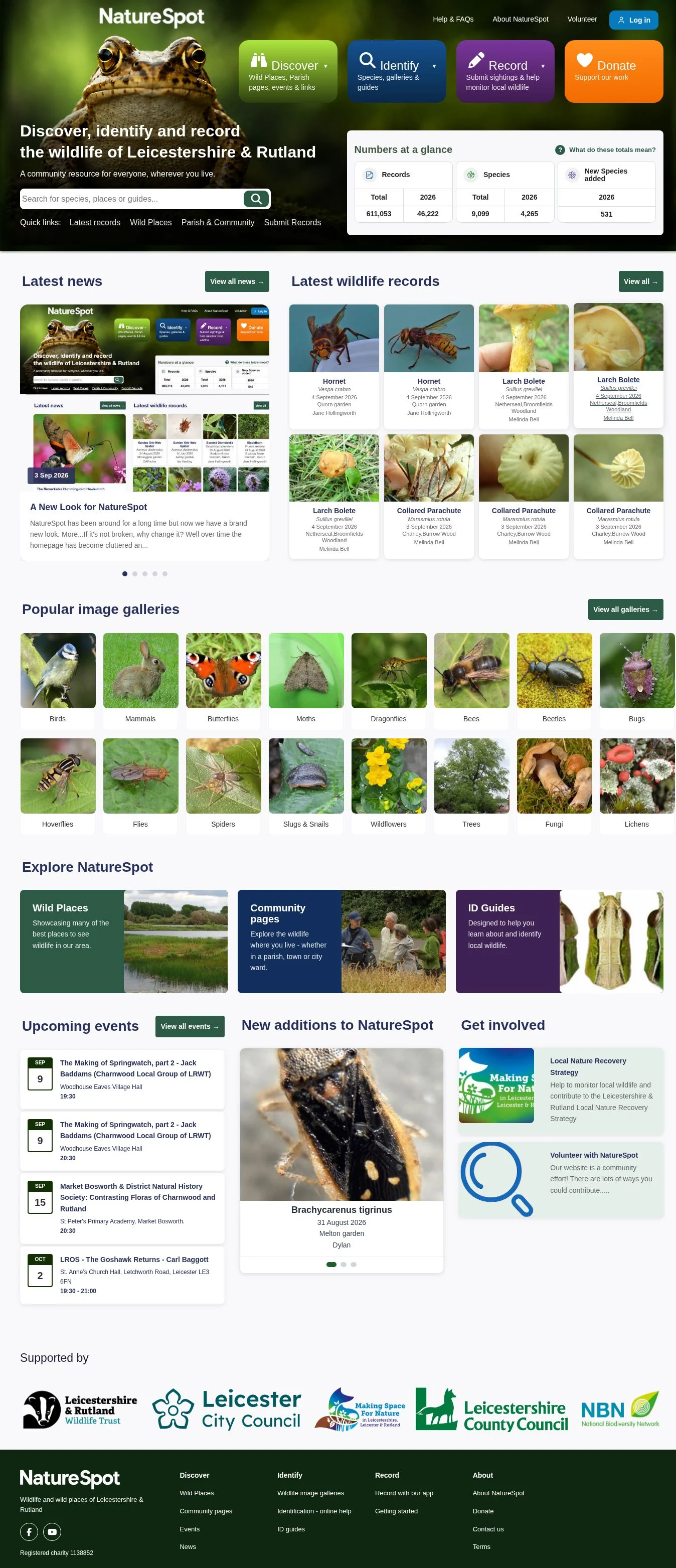
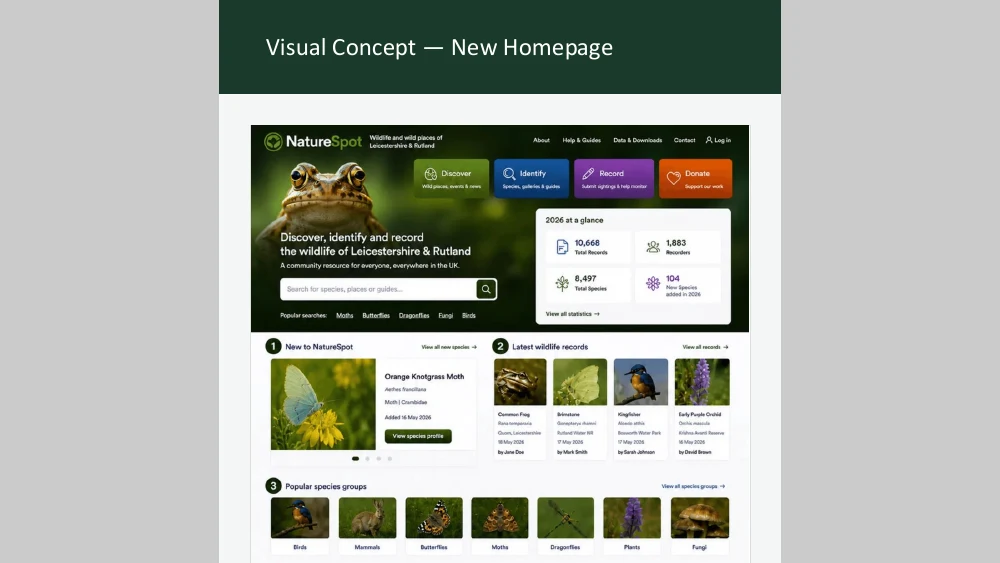
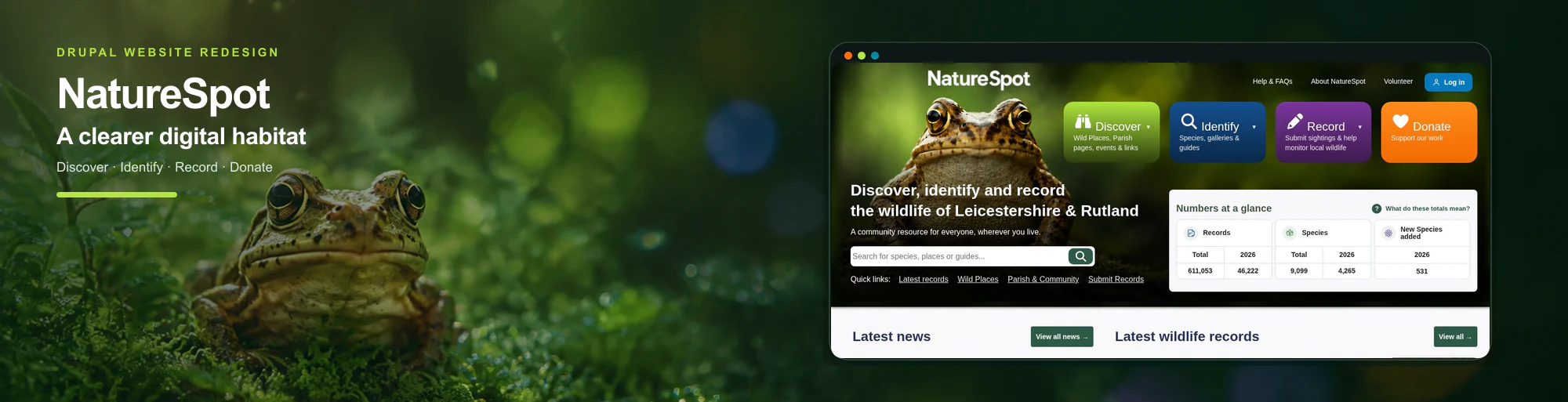
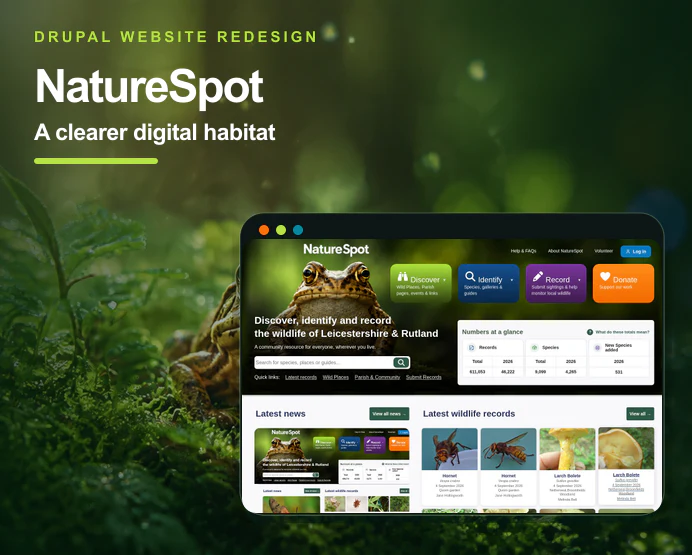
The new opening experience is organised around four actions: Discover, Identify, Record and Donate. Each route has its own colour, icon and short explanation, turning the site’s main purposes into immediate choices rather than another layer of navigation.

The familiar frog became the visual anchor for a full-width hero. Search, quick links and live wildlife statistics were brought into the opening view, so first-time visitors can understand NatureSpot quickly while experienced contributors can reach the tools they already know.

Letting photography lead the experience

NatureSpot’s wildlife photography is one of its strongest assets. The refreshed homepage and internal templates give those images room to breathe.

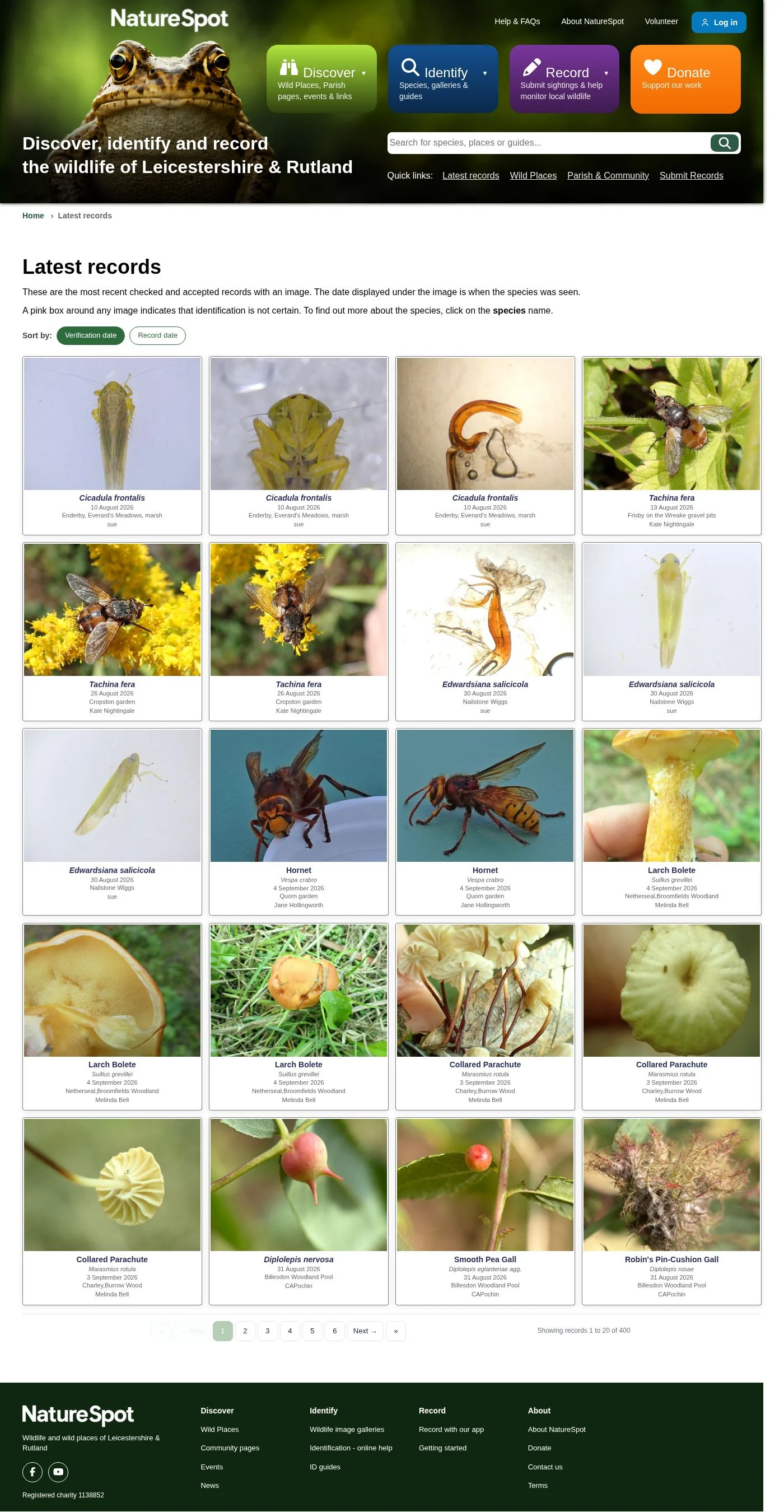
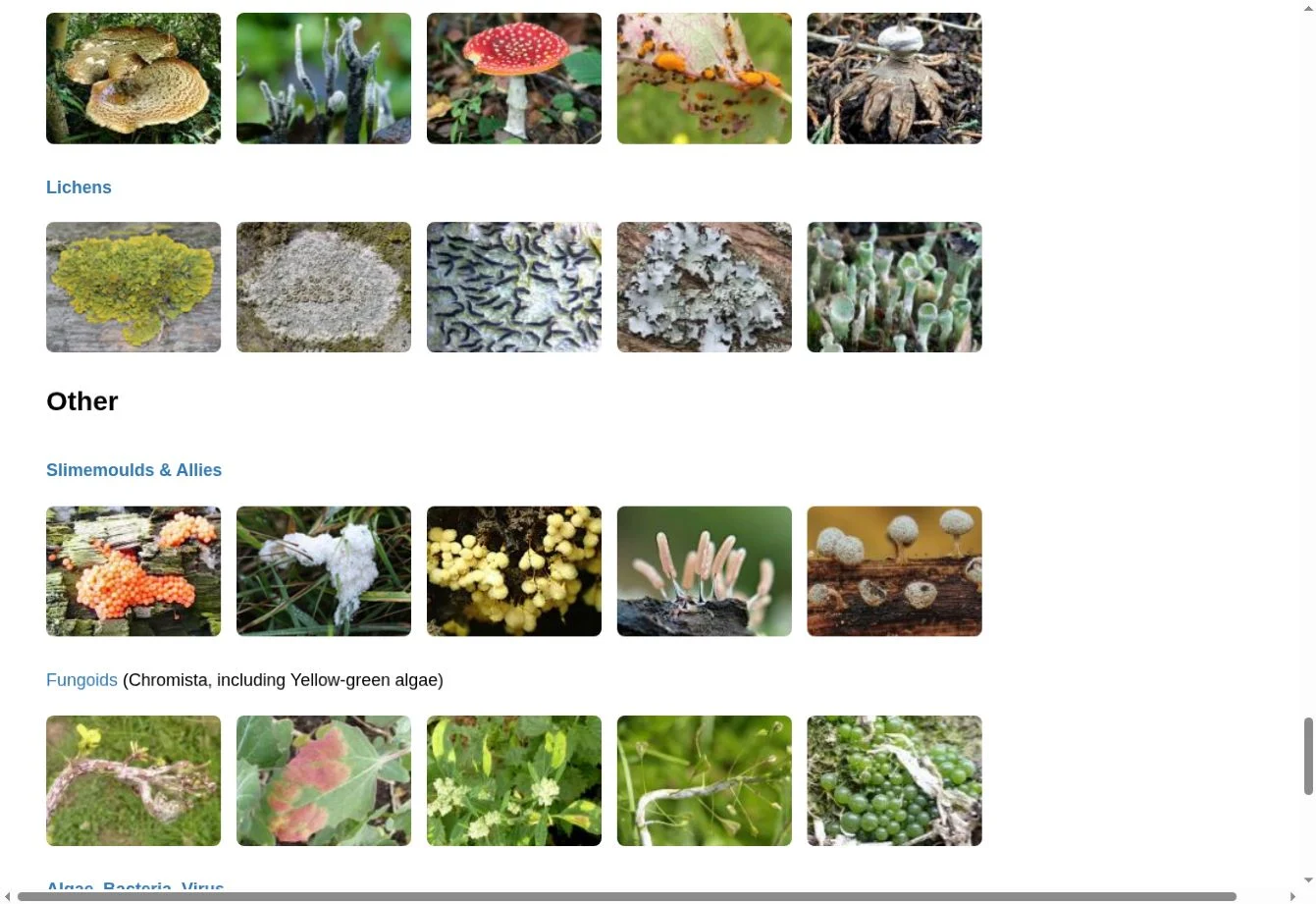
Recent records now use generous cards that combine photography with common and scientific names, sighting dates, locations and contributor details. Popular galleries offer a visual route into birds, mammals, butterflies, moths, dragonflies, plants, fungi and other groups. News, events, local discovery and ways to get involved each have a defined space and a clear next action.

Reusable templates, not a page-by-page reskin

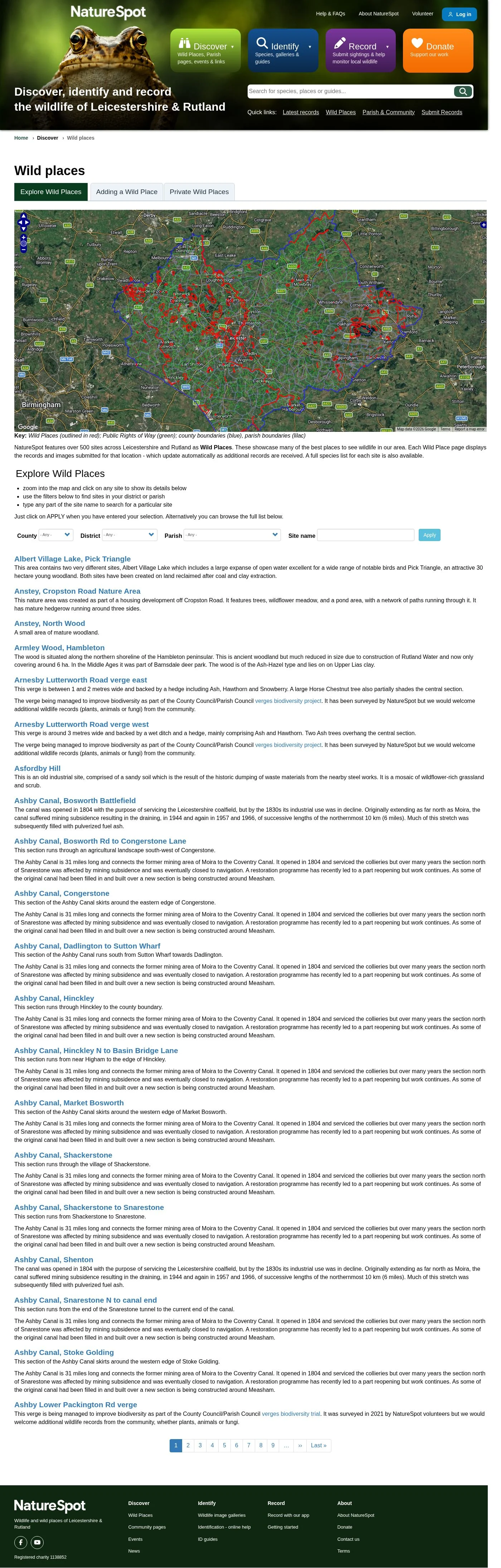
Seven priority page types shaped the design system: the homepage, latest records, species pages, Wild Places, community pages, record submission and a flexible general-content template.

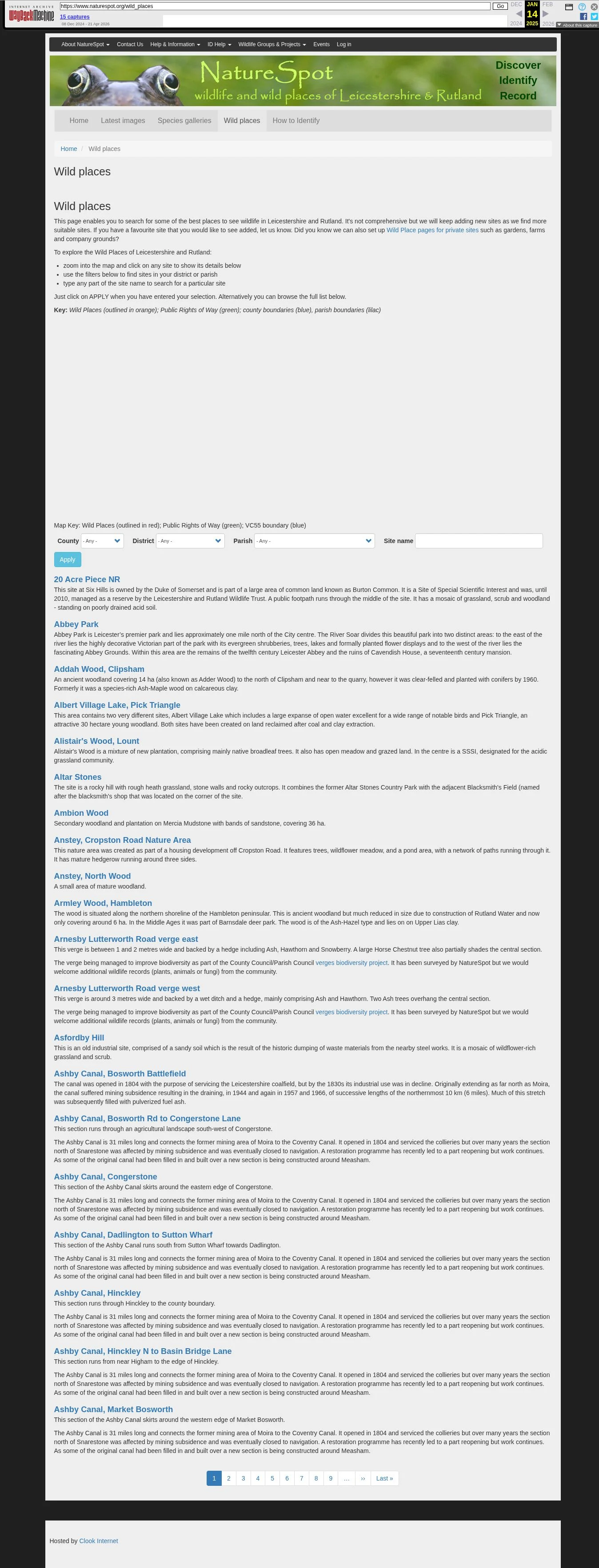
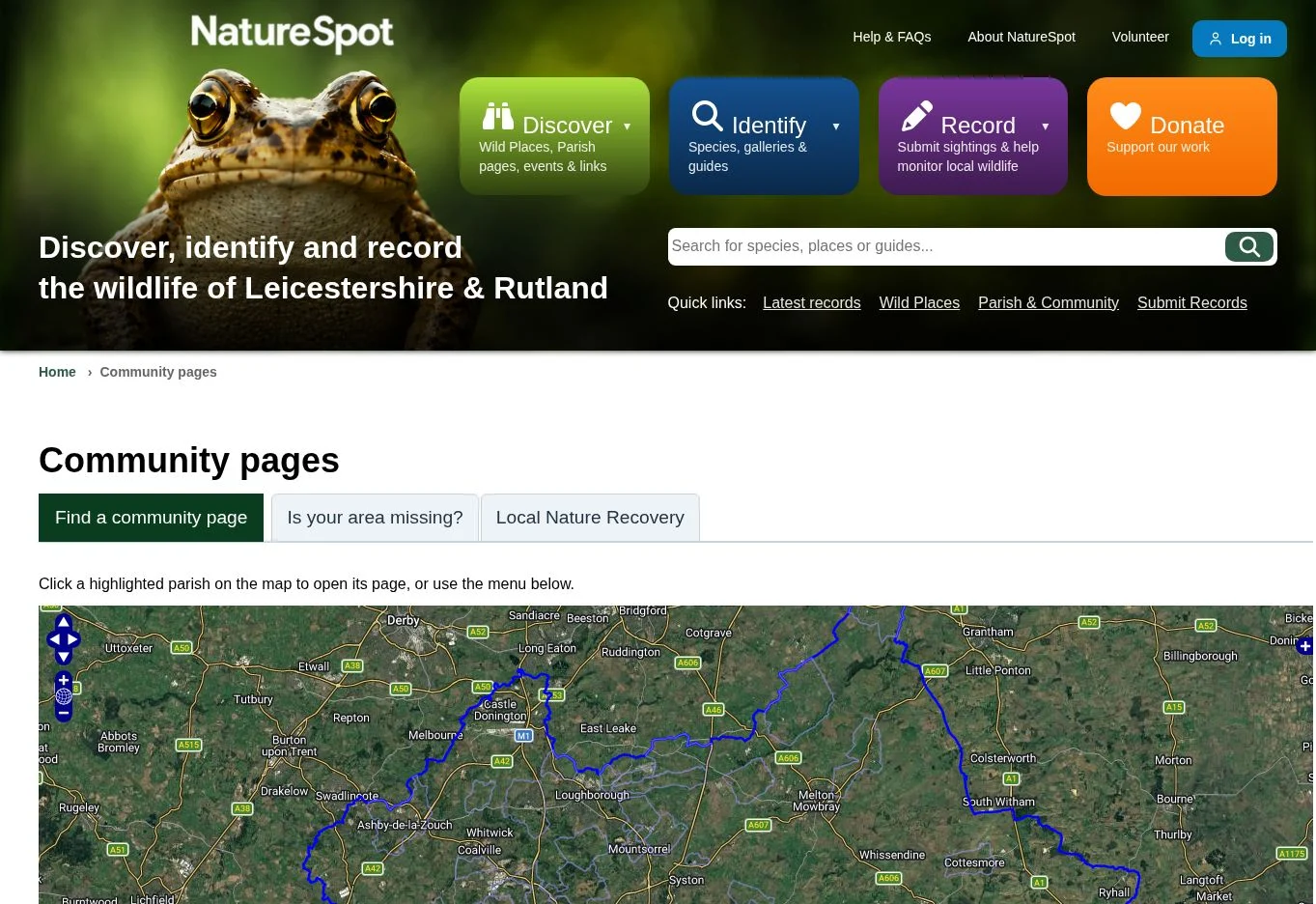
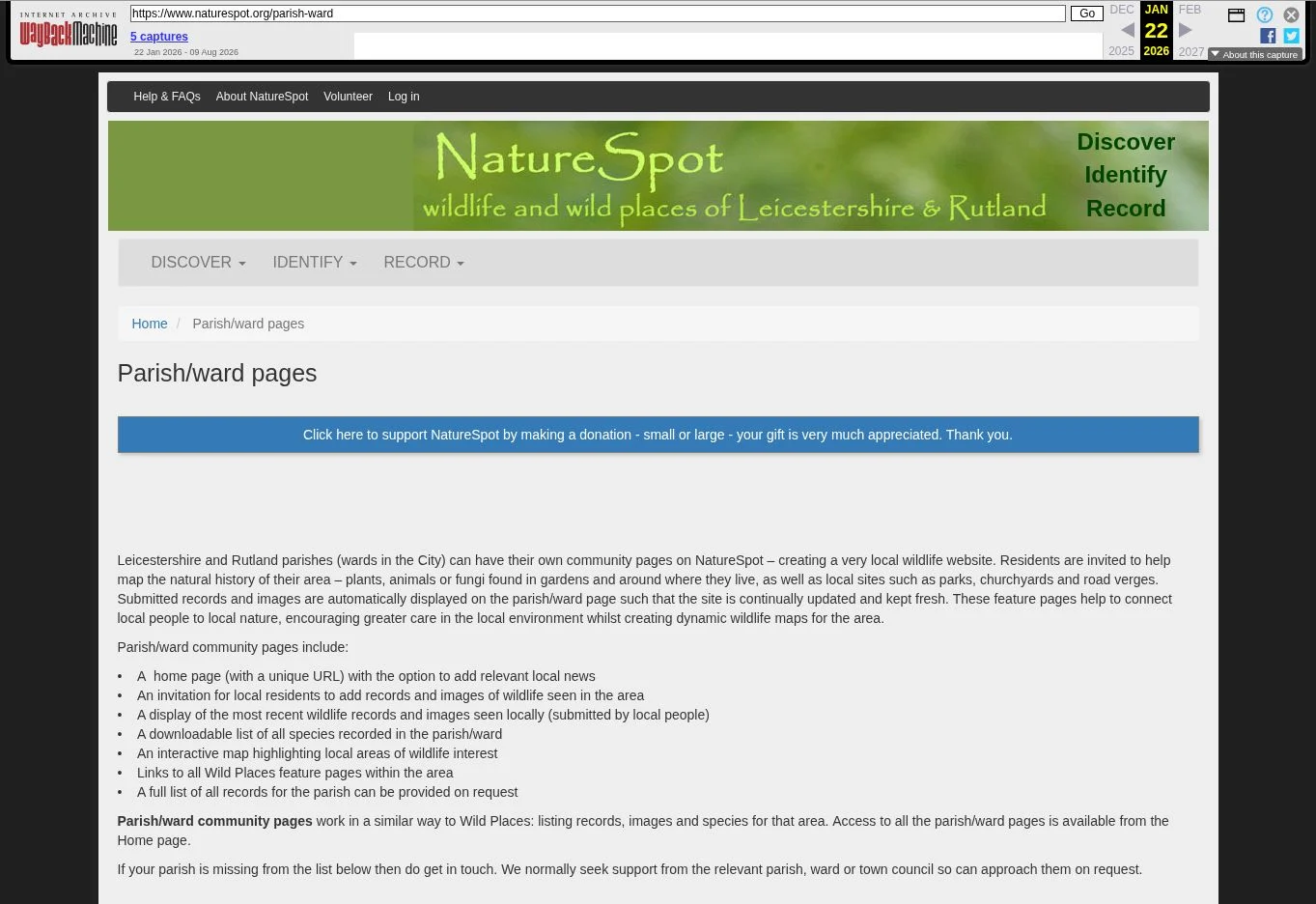
This template-led approach made the budget work across a large content estate. Wild Places and community pages gained clearer headings, tabs, filters and map space, while species and guide pages could retain the structured information their users rely on.

Wildlife records

After — latest wildlife records
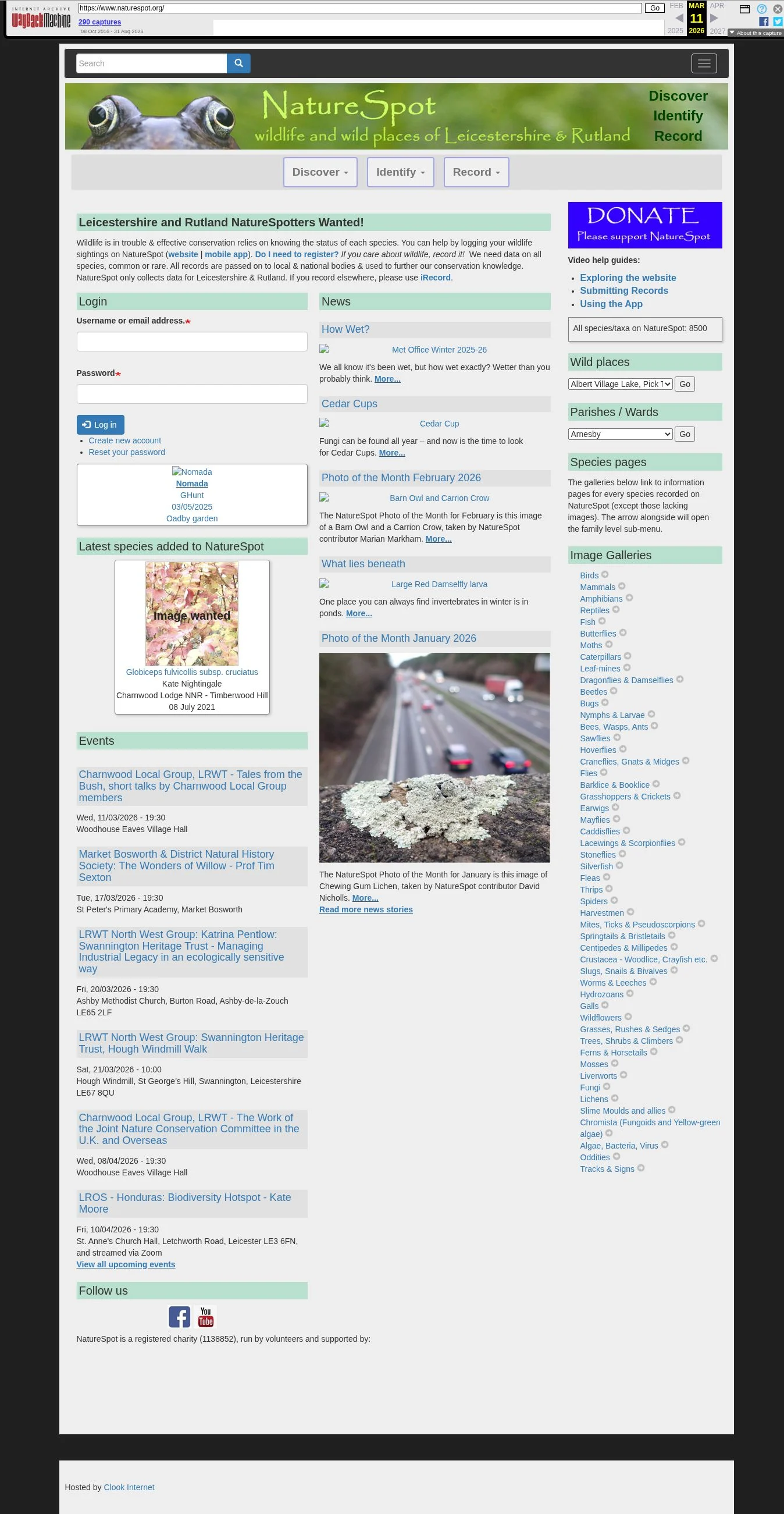
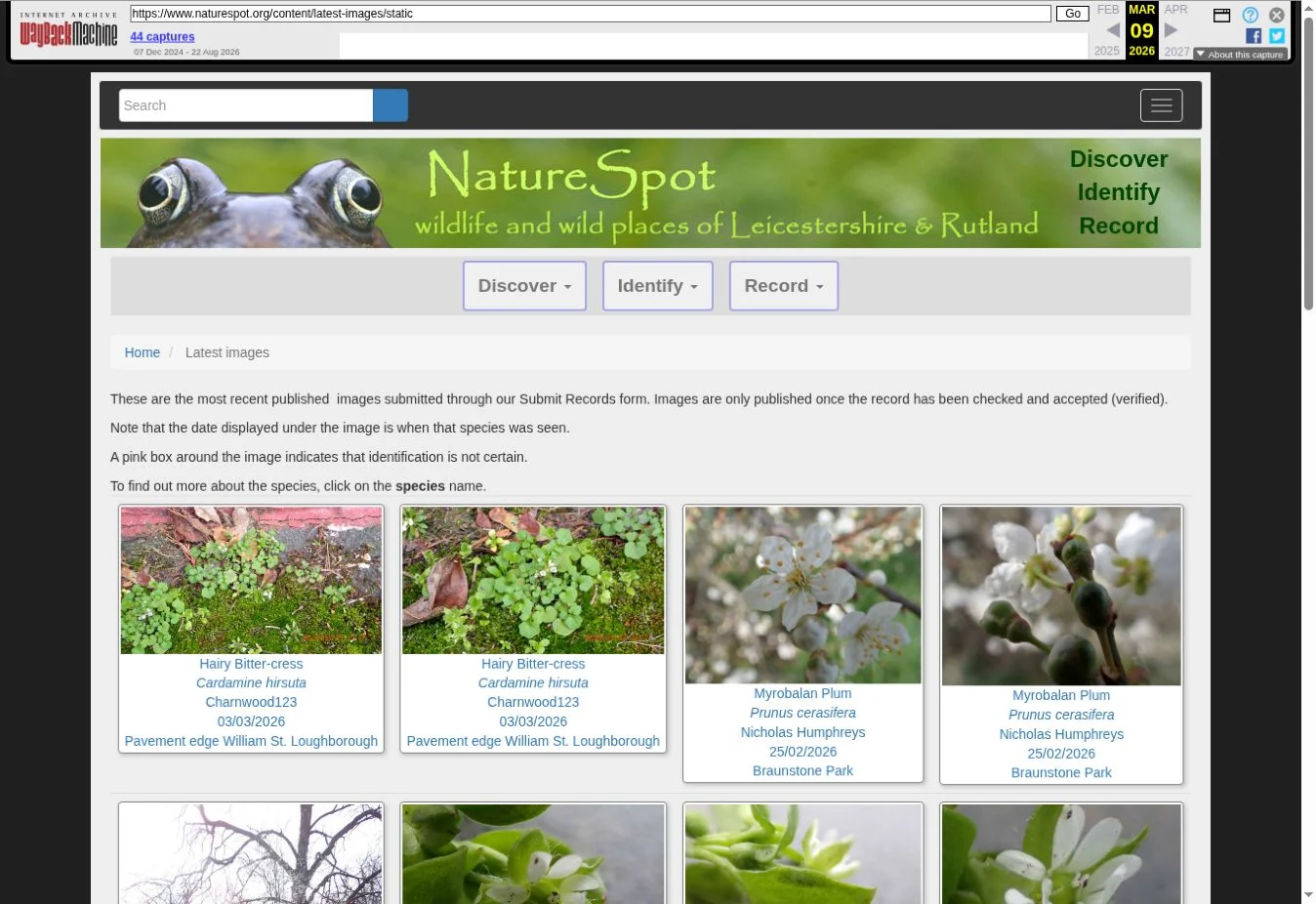
Before — latest images, archived March 2026

Keeping the right technical foundations

NatureSpot’s established Drupal taxonomy and its links with Indicia and iRecord were central to how the platform worked. After reviewing the options, the practical decision was to retain that ecosystem rather than replace proven data and recording workflows.

Opace focused on UX, visual design, responsive behaviour and front-end templates. NatureSpot’s specialist development partner retained responsibility for the Drupal upgrade and the Indicia/iRecord integration. That division kept the project’s limited charity budget focused on the areas visitors would see and use.

Designed for real responsive and user states

Review did not stop at a single desktop viewport. The team checked standard and larger screens, completed handheld refinements and revisited the interface when a logged-in administrator state exposed a secondary-navigation issue.

Maps and Elasticsearch calls also behaved differently on the temporary staging environment. Opace coordinated with the specialist developer so design review could continue while those integration-dependent services were configured correctly.

Wild Places

After — Wild Places
After — Wild Places
Before — Wild Places, archived January 2025

Community pages

After — community pages
Before — community pages, archived January 2026

Before views are archived captures; some interactive map content was not preserved in the archive.

Collaborative delivery

The first homepage concept was shared two days after kick-off. NatureSpot’s response was positive: “We really like the overall design.” From there, several stakeholders worked through a shared, colour-coded feedback sheet, supported by calls and demonstrations when a written comment needed more context.

The concept presentation established the information hierarchy, navigation rationale, responsive direction and reusable internal templates. The final live site then refined those ideas around real content and technical behaviour.

May 2026 homepage concept — presentation artwork
Design developmentMay 2026 homepage concept — presentation artwork

The outcome

The launched website gives NatureSpot a clearer, more visual public presence while preserving the specialist knowledge and recording functions built up over many years.

Visitors can now understand the charity’s purpose, search its resources and reach Discover, Identify, Record and Donate from the first screen. Recent sightings, galleries, events, places and community activity sit within one coherent responsive system, whether someone arrives with a mystery insect photograph, a favourite local walk or their first wildlife record.

Visit NatureSpot

Managing a content-rich charity, membership or community website? Talk to Opace about web design that makes complex information easier for people to use.

A detail from the redesigned species galleries
Wildlife discoveryA detail from the redesigned species galleries

Your next project

What could we build together?

Tell us what you want to achieve. We'll help you work out the next step.

Talk about your project ↗