Headless CMS Development
Your Content Deserves Better
Headless CMS - Structured Content, Delivered Anywhere.
One Content Source. Every Channel. Zero Constraints.
Headless CMS Development Services
Content Management Without the Constraints
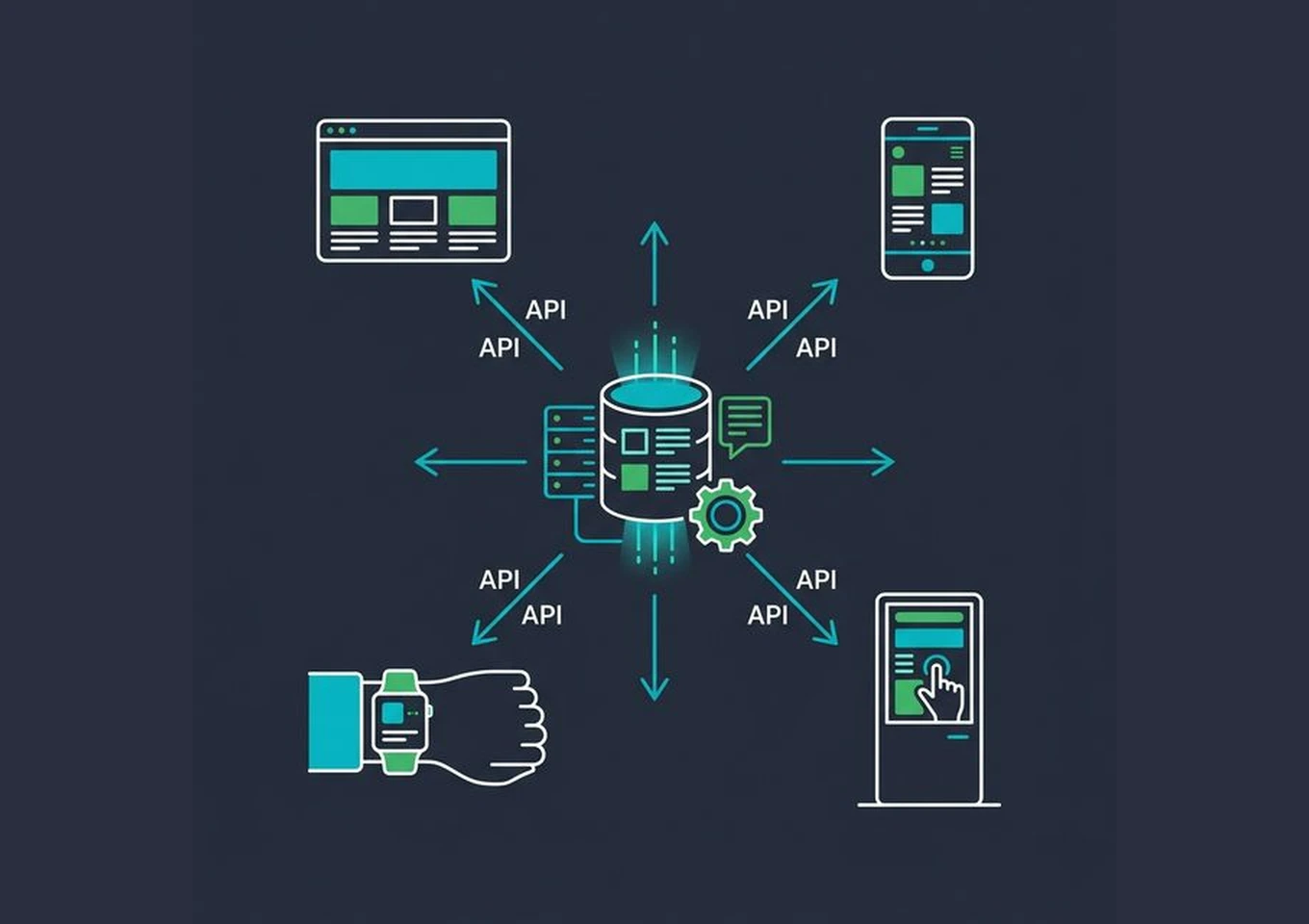
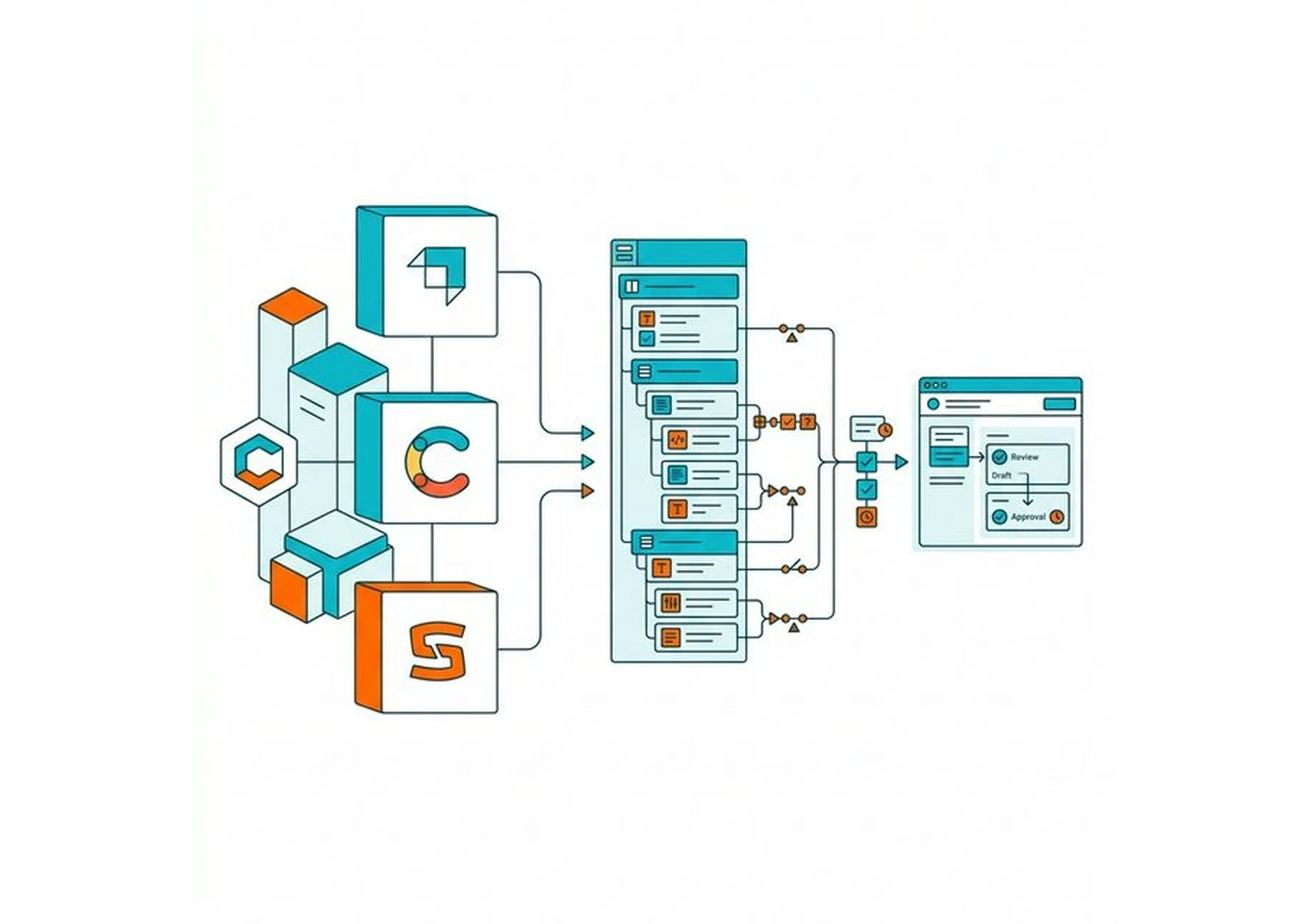
Traditional CMS platforms like WordPress and Joomla bundle content management and content presentation into a single system. That works well for straightforward websites, but it becomes a bottleneck when you need to publish the same content to a website, a mobile app, digital signage, a chatbot or a third-party marketplace. Headless CMS development separates the content repository from the presentation layer entirely. Content editors manage structured content through an intuitive editorial interface. Developers build the frontend using whatever technology suits each channel. The two communicate through a content API. No template constraints. No plugin conflicts. No monolithic upgrade cycles holding back your frontend.
Our Birmingham-based development team builds headless CMS solutions for businesses across the UK and internationally. We've implemented decoupled architectures using Strapi, Contentful, Sanity, headless WordPress and Directus for eCommerce retailers, professional services firms, SaaS platforms and multi-site publishers. The headless approach gives content teams editorial freedom while giving developers the flexibility to use React, Next.js, Astro or any modern web design services framework on the frontend. Combined with our Jamstack development services, headless CMS architecture delivers websites that are faster, more secure and more maintainable than traditional monolithic builds.
experience
Quick Navigation


STRATEGY WITHOUT
EXECUTION IS JUST NOISE
What our headless CMS development services include
- Content modelling and schema designWe design structured content models that make editorial work intuitive while ensuring content is truly reusable across channels. Fields, relationships, validation rules and content types are mapped to your real publishing workflows, not forced into generic blog-post templates.
- CMS platform selectionStrapi for self-hosted open-source flexibility. Contentful for enterprise-grade SaaS with global CDN delivery. Sanity for real-time collaboration and custom editorial workflows. Headless WordPress for teams familiar with WordPress. We recommend based on your requirements, not vendor partnerships.
- API integration and frontend buildWe build the presentation layer using modern frameworks including React, Next.js, Astro, Nuxt and SvelteKit. Content is fetched via GraphQL or REST APIs and rendered through optimised frontend components. The result is consistently fast page loads and complete design freedom.
- Multi-channel content deliveryHeadless architecture enables a single content source to feed your website, mobile app, email templates, digital kiosks and third-party platforms. Content is created once and delivered everywhere, reducing duplication and editorial overhead.
- Preview and editorial workflowWe implement robust preview systems so editors can see exactly how content will appear on the live site before publishing. Draft states, scheduled publishing, revision history and approval workflows are configured to match your team's editorial process.
- Migration from monolithic CMSMoving from WordPress, Drupal or another traditional CMS to headless requires careful content migration, redirect mapping and editorial retraining. Our website migration services ensure nothing breaks and editorial teams are confident with the new system from day one.
TECHNOLOGIES & PLATFORMS
Web Design & Development




















Choosing the right headless CMS platform
There is no single "best" headless CMS. The right choice depends on your content volume, editorial team size, developer preferences, hosting requirements and budget. Strapi is an excellent open-source option that runs on your own hosting, giving you full control over data and costs. It suits teams who want the flexibility of self-hosting without vendor lock-in. Contentful is a mature SaaS platform with strong enterprise features, a global CDN and an extensive marketplace of integrations. It suits larger organisations where reliability, uptime SLAs and vendor support matter.
Sanity stands out for its real-time collaborative editing experience and extremely flexible content modelling. It's particularly well-suited for editorial-heavy workflows where multiple content creators work simultaneously. Headless WordPress uses WordPress as a content backend with a decoupled frontend, which works well for organisations with existing WordPress skills and content that don't want to retrain their editorial team. We evaluate your specific requirements, run proof-of-concept builds where appropriate, and recommend the platform that delivers the best fit for your team, your content and your growth plans. Our Astro development expertise means we can pair any headless CMS with high-performance static rendering for the best possible page speed.

When headless is the right architecture and when it isn't
Headless CMS is not universally better than traditional CMS. It adds architectural complexity, requires frontend development skills and creates a dependency on APIs for content delivery. For a straightforward brochure website with a single editorial team, WordPress or a similar traditional CMS is often the simpler, more cost-effective choice. Headless becomes the right architecture when you need to deliver content to multiple channels, when frontend performance and design flexibility are critical priorities, when your development team wants to use modern frameworks, or when your content needs to be structured and reusable rather than page-specific.
Multi-site publishers, eCommerce businesses with app and marketplace requirements, SaaS companies with documentation portals, and organisations with complex content workflows all benefit from the decoupled approach. The key question is whether the additional flexibility and performance justify the additional complexity. We help clients make that assessment honestly. If headless isn't the right fit, we'll recommend WordPress development or CMS web development alternatives that better match their needs. The worst outcome is building a headless architecture for a project that would have been better served by a well-configured traditional CMS.
Sectors
We've Engineered Growth
Across Every Sector.
From bootstrap to boardroom, we've seen it all. And we make growth inevitable.
View All SectorsCharity & Non-Profit
Impactful, user-friendly websites that help charities and non-profits raise awareness and grow support.
Arts & Creative
Visually stunning portfolio sites that let artists, designers, and creatives showcase their work beautifully.
Engineering & Industrial
Specialised digital for engineering firms, manufacturing, and heavy industry.
IT & Technology
SEO, web design, and marketing for SaaS, IT services, and tech companies.
Healthcare & Medical
GDPR-compliant websites and patient-focused marketing for healthcare providers.
Financial Services
Trusted web design and marketing services for financial advisors and firms.
Manufacturing
Driving leads and visibility for UK manufacturers with targeted digital strategies.
Education & Schools
Engaging websites and visibility for schools, universities, and education providers.
Home & Garden
Beautiful eCommerce and brochure websites for home, garden, and lifestyle brands.
Food & Beverage
Appetising websites and online marketing for restaurants, food brands, and hospitality.
Logistics & Transport
High-performance websites for logistics, haulage, and transport companies across the UK.
B2B & Professional Services
Websites and marketing services for consultancies, legal firms, and service providers.
SELECTED WEB DESIGN WORK
Clients First.
Always.
We work smartly and ethically to provide intelligent and cost-effective solutions that maximise your ROI and fuel business growth.

Reviews & Testimonials
See What Our Customers Say
Opace are rated 4.92/5 for Web Design & Development based on 62 customer reviews




Local, National & Global Brands
Organisations We've Worked With










SOME OF OUR AGENCY CERTIFICATIONS
Award Winning Digital Agency
We make sure our digital marketers and specialists are always up to speed. From Google to HubSpot and Semrush, we've completed many of the major certifications available.
HEADLESS CMS AGENCY
What Sets Our Headless CMS Approach Apart
Headless CMS is a technology decision that affects your editorial team, your development workflow and your content strategy for years. Getting it wrong means vendor lock-in, editorial frustration and expensive rebuilds.
We treat headless projects as content architecture challenges, not just development tasks. The CMS, the content model, the editorial workflow and the frontend all need to work together. That's what we design for.
Content modelling expertise
The content model is the foundation of every headless CMS project. We design schemas that are intuitive for editors, structured for reuse and flexible enough to support future content types without rebuilding from scratch.
Platform-agnostic recommendations
We don't push one CMS platform because of a vendor partnership. We evaluate Strapi, Contentful, Sanity, headless WordPress and others against your specific requirements and recommend the best fit. Sometimes that means a traditional CMS.
Editorial experience priority
Technology means nothing if editors can't publish content efficiently. We prototype editorial workflows during the discovery phase, test content models with your team, and iterate until the authoring experience works naturally for the people who use it daily.
Modern frontend stack
React, Next.js, Astro, Nuxt, SvelteKit. We use the right frontend framework for each project, optimising for performance, developer experience and maintainability. Every build targets 95+ Lighthouse scores out of the box.
Migration without disruption
Moving from a monolithic CMS to headless doesn't require a big-bang relaunch. We can migrate incrementally, running old and new systems in parallel while content and editorial workflows transition smoothly.
Long-term maintainability
Headless architecture separates concerns cleanly: content from presentation, backend from frontend. This means each layer can be updated, replaced or scaled independently without affecting the others.
Why Choose Opace for Headless CMS Development?
If you're considering a headless CMS for your next project, these are the practical considerations that determine whether the investment pays off.
How do you decide between headless and traditional CMS?
We assess content complexity, channel requirements, editorial team skills and performance needs. Headless suits multi-channel publishing, performance-critical sites and complex content models. Traditional CMS suits straightforward single-site projects. We recommend honestly.
What ongoing costs should we expect?
Self-hosted options like Strapi have hosting costs but no licence fees. SaaS platforms like Contentful charge based on content volume and API calls. We provide transparent cost projections for each platform option before you commit.
Can headless work with our existing design system?
Yes. Headless architecture gives complete control over the frontend. We implement your design system as reusable frontend components that consume content from the CMS API. Any design, any layout, any interaction pattern is possible.
How do you handle content relationships?
Content references, taxonomies and relational fields are core to good content modelling. We design relationship schemas that support cross-linking, categorisation and content reuse without creating editorial complexity.
What happens if we want to change CMS later?
One advantage of headless architecture is portability. Because content and presentation are separate, migrating between CMS platforms is significantly easier than migrating monolithic systems. The frontend code stays the same.
Do you provide training for our editorial team?
Yes. We provide hands-on editorial training, documentation and recorded walkthroughs tailored to your specific content model and workflows. Training covers content creation, preview, scheduling, publishing and basic troubleshooting.
How much does headless CMS development cost?
Headless CMS projects typically range from £8,000-£30,000+ depending on content complexity, number of channels, CMS platform and frontend requirements. Ongoing hosting and CMS subscription costs vary by platform. Get in touch for a detailed scope and proposal.
What is a headless CMS and how is it different from WordPress?
A headless CMS separates content management from content presentation. Content is stored in a central repository and delivered via APIs to any frontend: websites, mobile apps, digital signage. Unlike traditional CMS platforms, there is no built-in template system, giving developers complete freedom over presentation. See Contentful's headless CMS guide for more.
Which headless CMS platform do you recommend?
It depends on your requirements. We work with Strapi (open-source, self-hosted), Contentful (enterprise SaaS), Sanity (real-time collaboration), headless WordPress (familiar editorial interface) and Directus (database-first). We recommend based on your content volume, team skills, hosting preferences and budget.
Can we migrate from WordPress to a headless CMS solution?
Yes. We regularly migrate WordPress sites to headless architectures. Content is exported and restructured into the new CMS, redirects are mapped, and editorial teams receive training on the new platform. We can also implement headless WordPress, which keeps the WordPress editorial interface while using a decoupled frontend.
Will a decoupled architecture improve our website speed?
Typically yes, significantly. Headless architecture with static site generation or edge rendering eliminates the database queries and plugin overhead that slow traditional CMS platforms. Our headless builds consistently score 95+ on Lighthouse performance metrics. Combined with a CDN, pages load in under 1 second globally.
Is this kind of setup harder for content editors to use?
Not necessarily. Platforms like Sanity and Contentful provide modern, intuitive editorial interfaces that many editors prefer to WordPress. We invest heavily in content model design and editorial workflow configuration to ensure the authoring experience is straightforward. Preview functionality lets editors see exactly how content will appear before publishing.
Can a decoupled content platform handle eCommerce?
Yes. Headless CMS pairs well with headless eCommerce platforms like Shopify Hydrogen, commercetools or Medusa. Content (blog posts, landing pages, brand storytelling) is managed in the CMS, while product data, inventory and checkout are handled by the commerce platform. Both feed the same frontend.
How do you handle search engine optimisation with this architecture?
Headless CMS can be excellent for SEO when implemented correctly. Static site generation creates pre-rendered HTML pages that search engines crawl easily. Structured content models make it simple to manage meta titles, descriptions, schema markup and canonical URLs. We ensure all SEO requirements are addressed during development.
How do content previews work without templates?
We implement preview functionality that generates a live preview of content within the editorial interface. Editors click 'Preview' and see exactly how their changes will appear on the website, mobile app or other channels. Draft content is rendered through the same frontend code, ensuring visual accuracy before publishing.
How do you ensure clear communication with clients in different time zones?
Yes. Our development team is Birmingham-based but we build headless CMS solutions for clients across the UK and internationally. Development is managed through version control and modern collaboration tools. We've delivered projects for businesses in London, Manchester, Edinburgh and overseas.
FROM THE BLOG
Our Latest Web Design Insights

What Is DLSS 5? AI Generated Art, Neural Rendering & When AI Overrides the Artist
What is DLSS 5 and why are game artists furious? We break down neural rendering, the AI generated art controversy, and the AI bias problem.
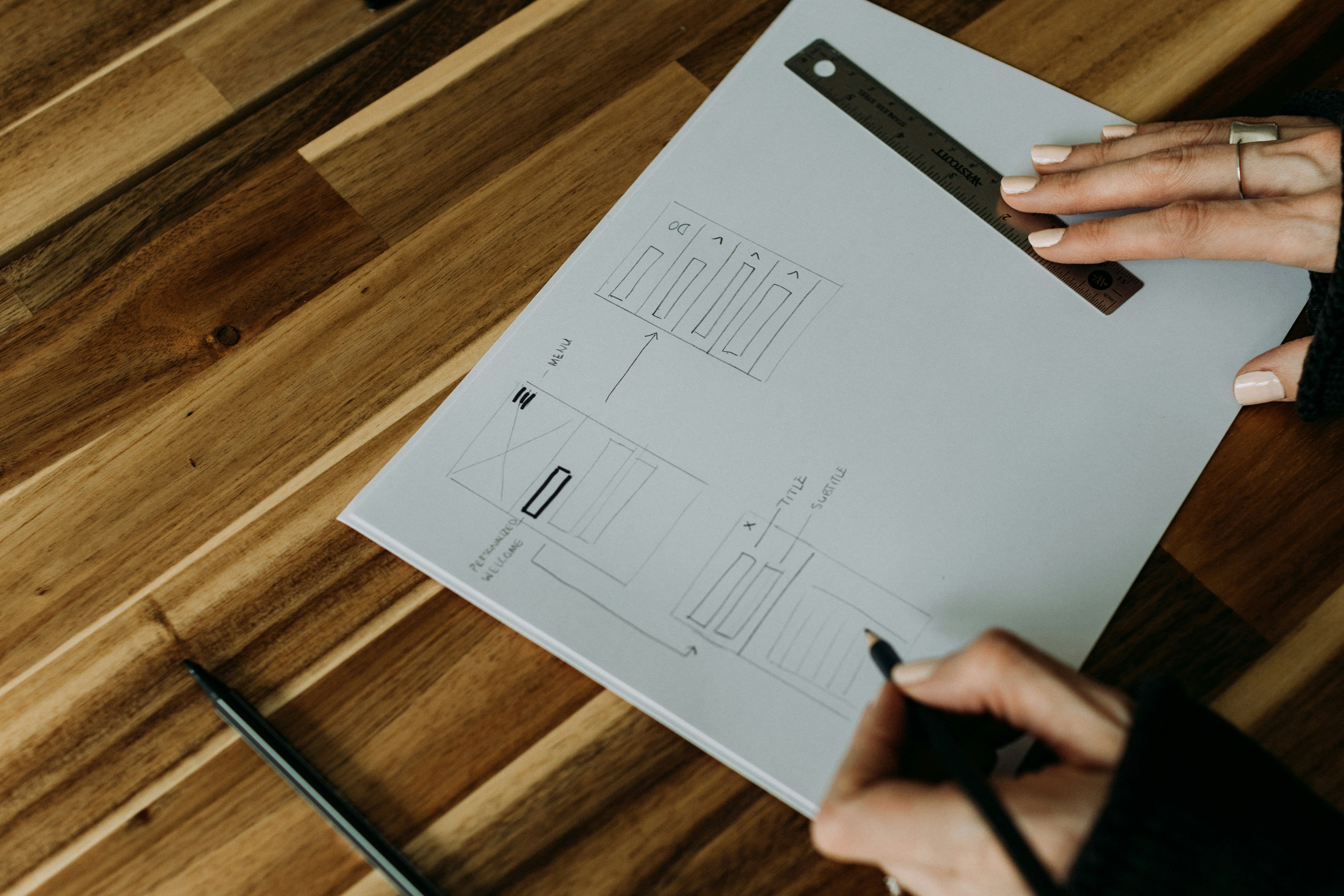
The Future of Web Design: Creating Websites with Intelligent User Interfaces (IUI)
Discover the future of web design with Intelligent User Interfaces (IUI), AI UX & UI. Learn how AI web design & adaptive interfaces are shaping modern websites.

The Online Safety Act Consequences for Websites & SEO? The Road to Hell is Paved with Good Intentions
What are The Online Safety Act Consequences for small businesses, websites & SEO? We explore how the road to hell is paved with good intentions. Read on.
Get in Touch
Interested in Working with Us?
We have 100% happy customers, so don't delay. Get in touch today and see how we can help.
SEND US A MESSAGE