Jamstack Development Services
Websites That Load in Under
Jamstack Development - Pre-Rendered, CDN-Delivered, Fast.
No Database Queries. No Server Wait. Just Instant Pages.
Jamstack Development Services
Pre-Built Pages, Edge Delivery, Zero Server Dependency
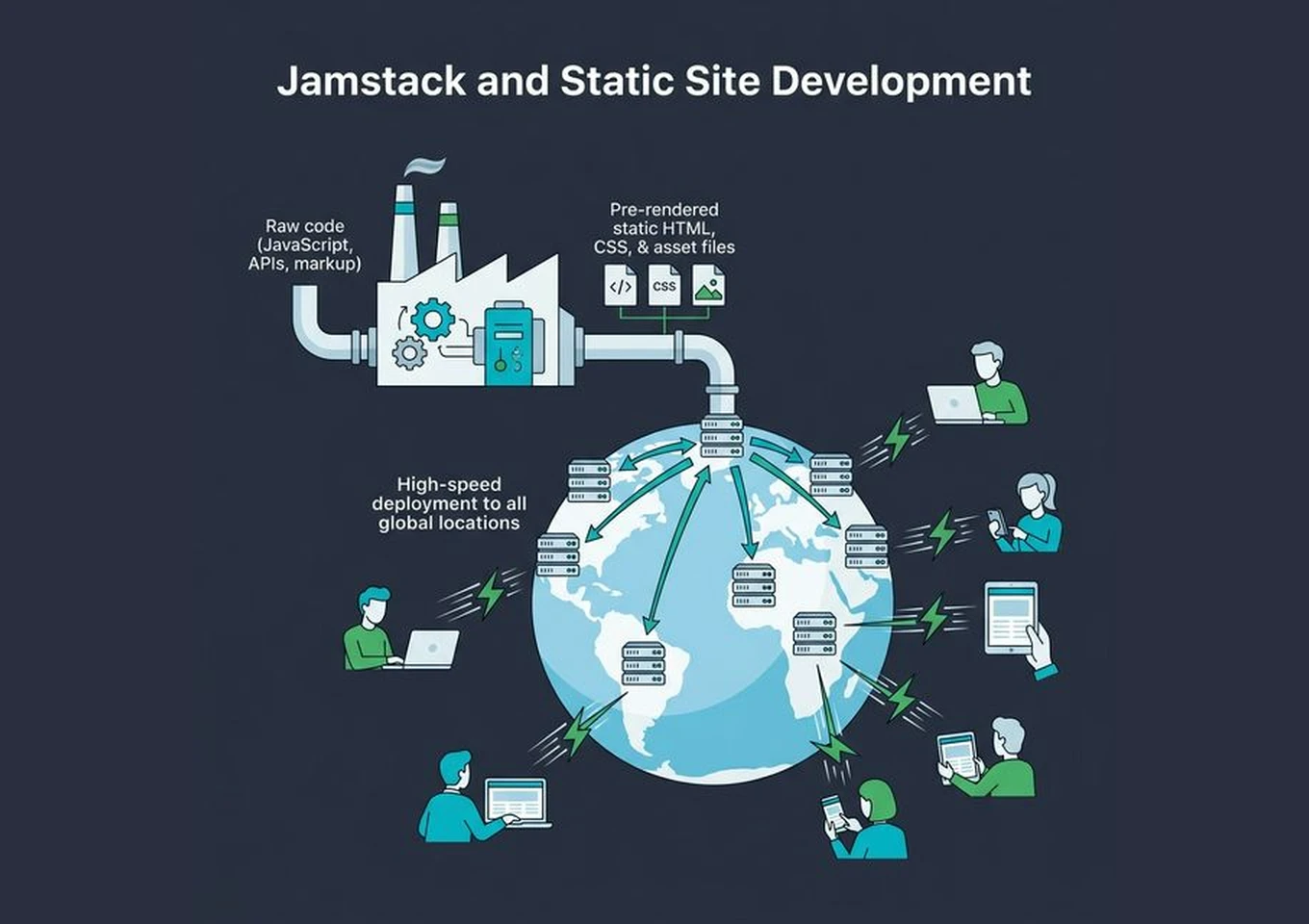
Traditional websites generate every page on request. A visitor clicks a URL, a web server queries a database, assembles the page from templates and plugins, and sends it to the browser. Every request repeats that process. It's slow, resource-intensive and creates security vulnerabilities at every layer. Jamstack development services eliminate that entire runtime chain. Pages are pre-built during a build step and deployed as static HTML to a global CDN. When a visitor requests a page, the nearest edge server delivers the pre-rendered HTML instantly. No database. No server processing. No waiting.
Our Birmingham-based development team builds Jamstack sites for businesses across the UK and internationally using frameworks including Astro, Next.js, Nuxt, Gatsby and Eleventy. We've built corporate websites, documentation portals, eCommerce storefronts and multi-language marketing sites that consistently score 95-100 on Lighthouse performance metrics. The speed advantage isn't marginal: our Jamstack builds typically load 2-5x faster than equivalent WordPress or Drupal sites. Combined with our headless CMS development services, content teams get an intuitive editorial interface while visitors get pages that load before they've finished blinking. Our own website is built on this architecture using Astro development, which gives us first-hand proof of the performance, security and maintainability benefits.
experience
Quick Navigation



STRATEGY WITHOUT
EXECUTION IS JUST NOISE
What our Jamstack development services include
- Framework selection and architectureWe evaluate your requirements against Astro, Next.js, Nuxt, Gatsby, SvelteKit and Eleventy. Each has strengths for different use cases. We recommend based on your content model, interactivity requirements, team skills and performance targets, not framework popularity.
- Static site generation (SSG)Static site generation (SSG) - Pre-rendering every page at build time for maximum performance and security. Pages are pure HTML served from CDN edge servers. Ideal for content-heavy sites where pages don't change between builds.
- Incremental static regeneration (ISR)Incremental static regeneration (ISR) - For sites with frequently changing content, ISR regenerates specific pages on demand while keeping the performance benefits of static delivery. Product pages, pricing updates and news content stay current without full rebuilds.
- Headless CMS integrationWe connect Jamstack frontends to headless CMS platforms including Strapi, Contentful, Sanity and headless WordPress. Content changes trigger automatic rebuilds and deployment through CI/CD pipelines.
- Serverless functions and API routesJamstack isn't limited to static content. We implement serverless functions for form submissions, search, authentication, payment processing and dynamic data. Server logic runs on-demand at the edge without maintaining traditional server infrastructure.
- CDN deployment and hostingWe deploy to Netlify, Vercel, Cloudflare Pages or AWS CloudFront depending on your requirements. Global CDN distribution ensures fast load times worldwide. Hosting costs are typically 50-90% lower than equivalent traditional server hosting.
TECHNOLOGIES & PLATFORMS
Web Design & Development
























Why Jamstack sites consistently outperform traditional builds
The performance advantage of Jamstack is architectural, not cosmetic. Traditional CMS platforms like WordPress execute PHP, query MySQL databases and assemble pages from dozens of plugins on every request. Even with caching, that runtime overhead creates a performance ceiling. Jamstack eliminates the runtime entirely. Pages are pre-built HTML files served from the nearest CDN edge server. There is no database to query, no PHP to execute, no plugin chain to process. The result is Time to First Byte (TTFB) measured in single-digit milliseconds globally, not the 200-500ms typical of traditional CMS hosting.
Security is equally improved. Traditional CMS platforms present a large attack surface: database credentials, admin panels, plugin vulnerabilities, file upload exploits. Jamstack sites have no database, no admin panel on the production server and no runtime code execution. The attack surface shrinks to the CDN itself, which is managed by specialist infrastructure providers with dedicated security teams. For our SEO services clients, Jamstack's speed advantage directly impacts Core Web Vitals scores, which are confirmed Google ranking factors. Faster sites rank better, convert better and provide better user experiences. Our web design services team has seen clients achieve 20-40% improvements in page speed scores simply by migrating from WordPress to Jamstack architecture.

Choosing the right static site generator
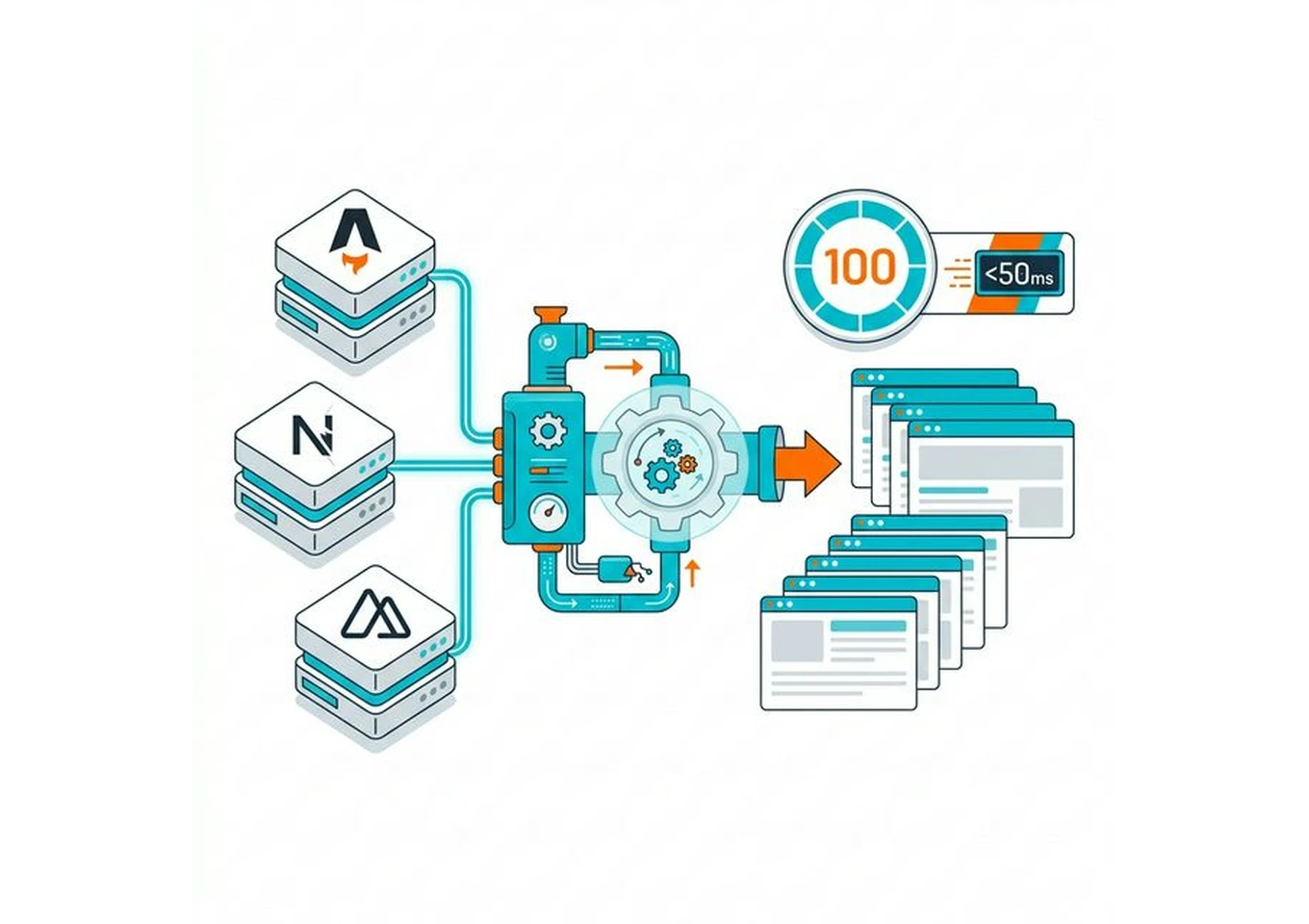
Astro excels for content-heavy marketing sites and documentation portals. It ships zero JavaScript by default, produces the smallest possible page weight, and supports island architecture for adding interactivity only where needed. Next.js is the strongest choice for applications that need server-side rendering, API routes and complex client-side interactivity alongside static pages. Nuxt provides a similar capabilities for Vue-based teams. Gatsby still powers many large content sites, though its build times at scale have pushed teams towards alternatives.
Eleventy is a minimalist option that works with any templating language and produces extremely clean output. SvelteKit offers an innovative approach for teams who value small bundle sizes and compile-time optimisation. Our recommendation always starts with your requirements: content volume, update frequency, interactivity needs, team skills and performance targets. We build proof-of-concept prototypes when the decision isn't clear-cut, testing real page speed, build times and editorial workflows before committing to a full build. For the majority of content and marketing sites, Astro and Next.js are the frameworks we recommend most frequently, though the right answer depends entirely on your project.
Sectors
We've Engineered Growth
Across Every Sector.
From bootstrap to boardroom, we've seen it all. And we make growth inevitable.
View All SectorsCharity & Non-Profit
Impactful, user-friendly websites that help charities and non-profits raise awareness and grow support.
Arts & Creative
Visually stunning portfolio sites that let artists, designers, and creatives showcase their work beautifully.

Engineering & Industrial
Specialised digital for engineering firms, manufacturing, and heavy industry.
IT & Technology
SEO, web design, and marketing for SaaS, IT services, and tech companies.

Healthcare & Medical
GDPR-compliant websites and patient-focused marketing for healthcare providers.

Financial Services
Trusted web design and marketing services for financial advisors and firms.

Manufacturing
Driving leads and visibility for UK manufacturers with targeted digital strategies.
Education & Schools
Engaging websites and visibility for schools, universities, and education providers.

Home & Garden
Beautiful eCommerce and brochure websites for home, garden, and lifestyle brands.
Food & Beverage
Appetising websites and online marketing for restaurants, food brands, and hospitality.
Logistics & Transport
High-performance websites for logistics, haulage, and transport companies across the UK.
B2B & Professional Services
Websites and marketing services for consultancies, legal firms, and service providers.

SELECTED WEB DESIGN WORK
Clients First.
Always.
We work smartly and ethically to provide intelligent and cost-effective solutions that maximise your ROI and fuel business growth.






Reviews & Testimonials
See What Our Customers Say
Opace are rated 4.92/5 for Web Design & Development based on 62 customer reviews





Local, National & Global Brands
Organisations We've Worked With















SOME OF OUR AGENCY CERTIFICATIONS
Award Winning Digital Agency
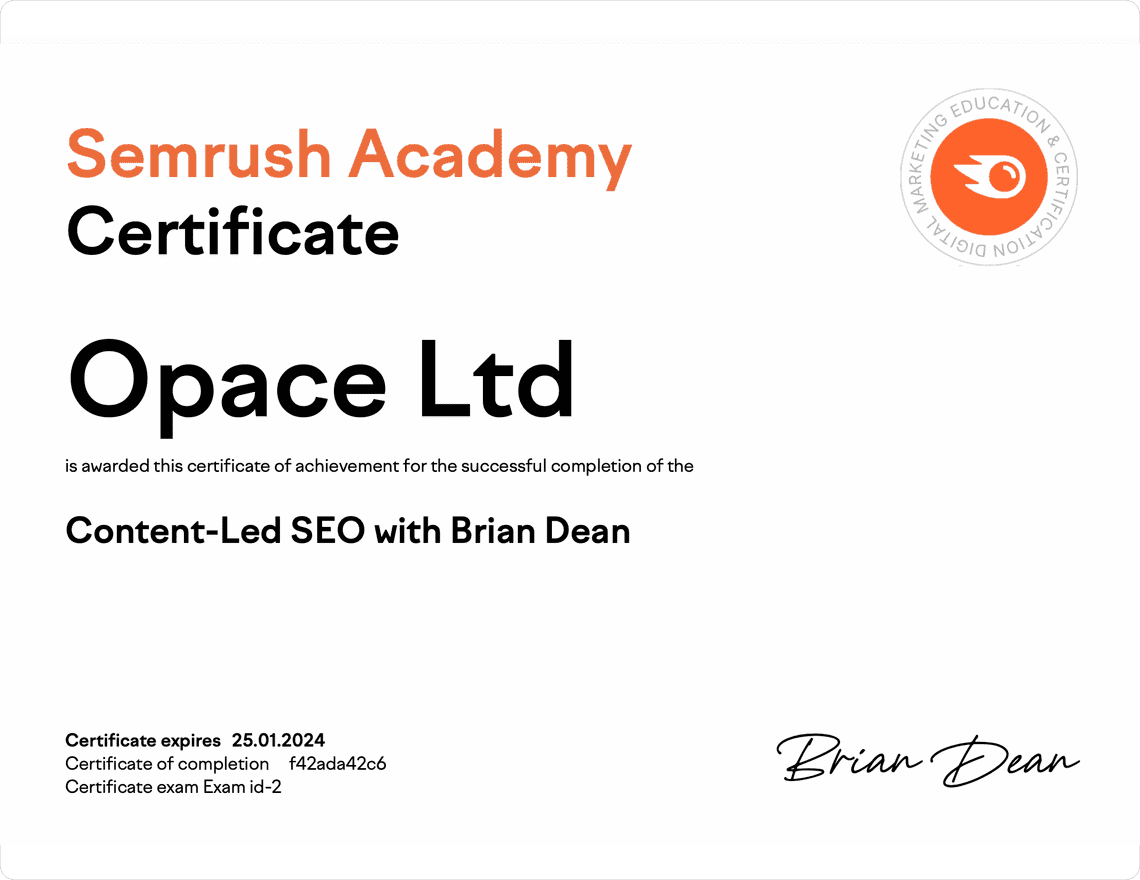
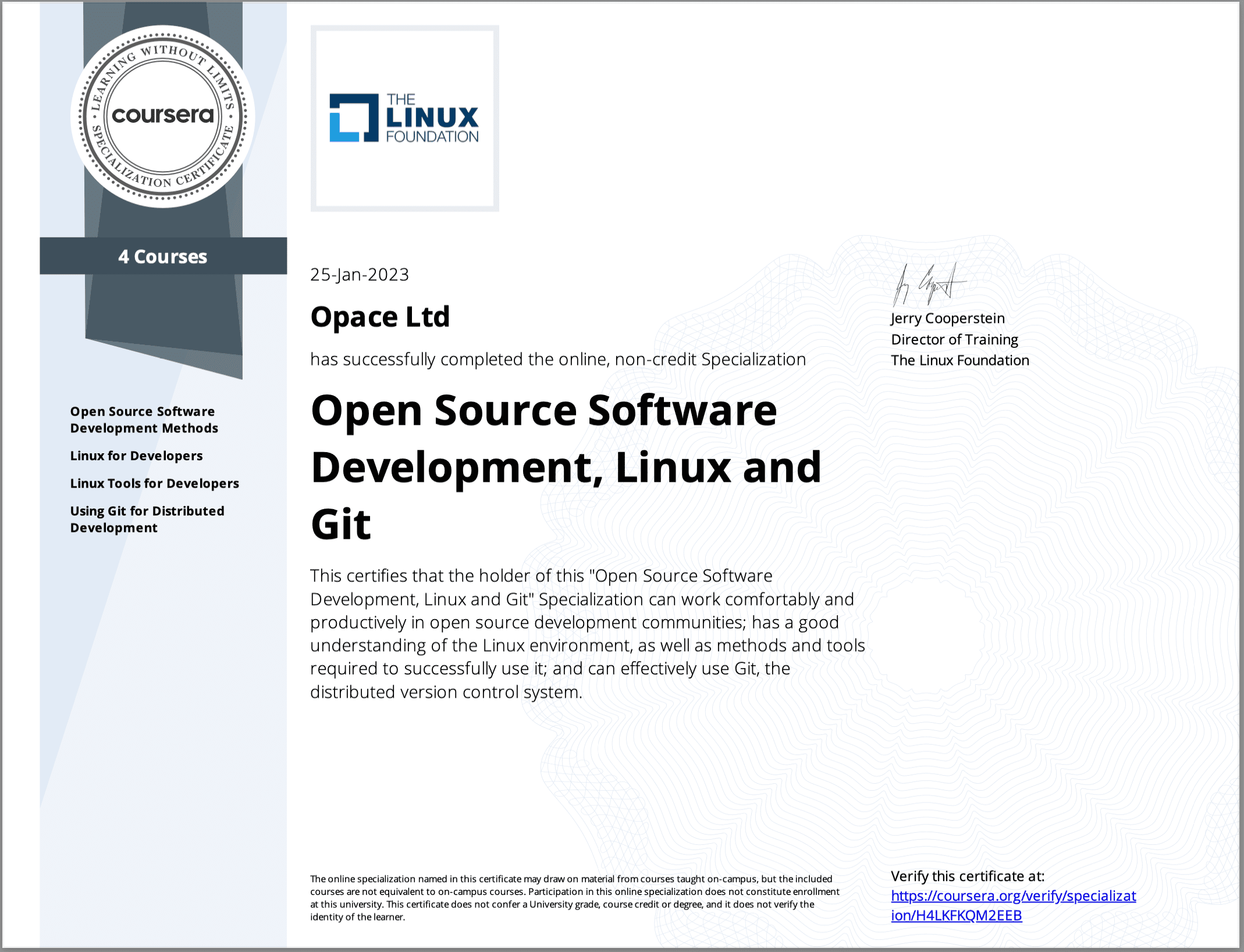
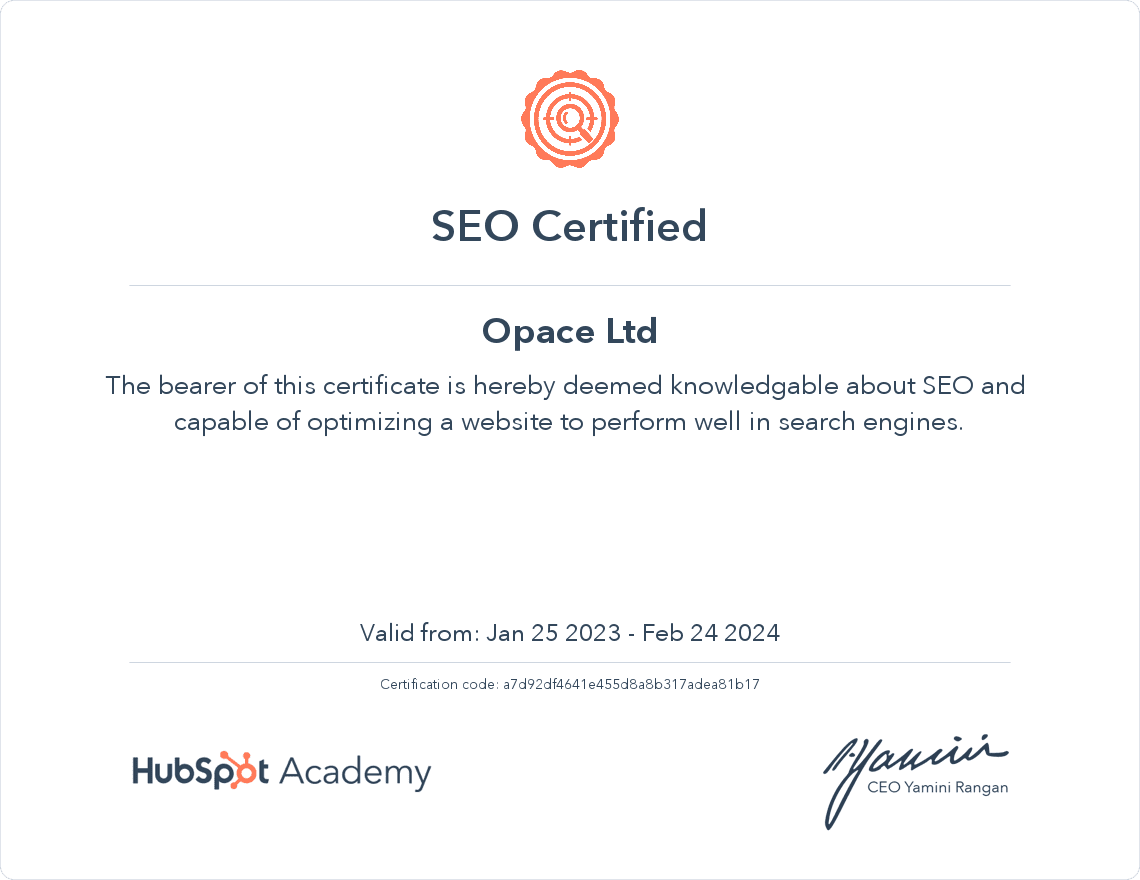
We make sure our digital marketers and specialists are always up to speed. From Google to HubSpot and Semrush, we've completed many of the major certifications available.

JAMSTACK DEVELOPMENT AGENCY
What Sets Our Jamstack Approach Apart
Jamstack is an architecture choice, not a trend. It suits some projects brilliantly and others poorly. Agencies that push it for everything are selling a solution, not solving a problem.
We assess whether Jamstack is the right fit for your project before writing a line of code. When it is, we build it properly. Content modelling, build pipeline, editorial workflows and deployment all receive equal attention.
Architecture-first thinking
We start with your requirements, not our preferred framework. Content volume, update frequency, interactivity needs and team skills all influence whether Jamstack is the right choice. When it is, the framework selection follows logically from the requirements.
Build pipeline expertise
Jamstack performance depends on well-configured build pipelines. We optimise build times, implement incremental regeneration, configure preview deployments and set up continuous deployment from Git. The build process is invisible to editors but critical to the developer and editorial experience.
Performance by default
Our builds ship minimal JavaScript, serve optimised images, pre-render all pages and deploy to global CDNs. Lighthouse scores of 95-100 are not aspirational targets; they are our baseline. Performance is designed in from the first commit.
Content team empathy
Editors don't care about your build pipeline. They care about creating content quickly and seeing it published reliably. We invest in editorial preview systems, clear publishing workflows and training that makes content teams productive, not frustrated.
Progressive enhancement
Static pages load and work without JavaScript. Interactive features enhance the static base through island architecture and client-side hydration. This means pages are accessible, crawlable and usable even when JavaScript fails.
Proven at scale
We run our own website on Jamstack architecture. We've seen the build times, the deployment edge cases, the content model decisions and the hosting trade-offs from the inside. That operational experience informs every client project.
Why Choose Opace for Jamstack Development?
If you're evaluating Jamstack agencies, these practical considerations will help you assess whether the architecture fits your project and whether the agency fits your team.
How do you decide between Jamstack and traditional CMS?
We assess content update frequency, dynamic feature requirements, team technical skills and performance priorities. Jamstack excels for marketing sites, documentation portals and content-heavy sites. Traditional CMS may suit projects with complex server-side logic or limited technical teams.
What build times should we expect?
Typical builds complete in 30-120 seconds for sites with hundreds of pages. Larger sites use incremental regeneration to rebuild only changed pages. Build times depend on content volume, image processing and API calls. We optimise build pipelines as part of every project.
Can Jamstack handle eCommerce?
Yes. Jamstack pairs well with headless commerce platforms like Shopify Hydrogen, Snipcart and Medusa. Product pages are pre-rendered for speed, while checkout, cart and inventory queries use APIs. The result is fast browsing with reliable transactional functionality.
What happens if our hosting provider goes down?
CDN hosting distributes your site across dozens of global points of presence. If one node fails, traffic routes to the next nearest. Uptime for Netlify and Vercel is typically 99.99%. Traditional single-server hosting cannot match this level of redundancy.
Can we add features later without rebuilding?
Jamstack architecture is modular. Serverless functions, API integrations and new content types can be added incrementally. The static frontend, headless CMS and API layer are independent, meaning each can evolve without affecting the others.
Do you provide ongoing support?
Yes. We offer monthly maintenance and support packages covering dependency updates, build pipeline monitoring, content model extensions and performance optimisation. Support ensures your Jamstack site stays fast, secure and current as your business evolves.
How much does Jamstack development cost?
Jamstack development projects typically range from £5,000-£25,000+ depending on complexity, framework choice, content volume and integration requirements. Ongoing hosting costs are typically £10-£100 per month on platforms like Netlify or Vercel, significantly lower than traditional hosting. Get in touch for a detailed proposal.
What is Jamstack development and why is it gaining traction?
Jamstack stands for JavaScript, APIs and Markup. It's a web architecture where pages are pre-built as static HTML during a build process and served from a CDN. Dynamic functionality (forms, search, authentication) is handled by serverless functions and third-party APIs. The result is websites that are extremely fast, secure and scalable. See jamstack.org for the official specification.
Is Jamstack development suitable for large or complex websites?
Yes. Jamstack sites with tens of thousands of pages are common. Incremental static regeneration (ISR) allows individual pages to be rebuilt without regenerating the entire site, keeping build times manageable even at scale. eCommerce sites, documentation portals and publisher websites all work well at scale.
Can we still have dynamic features like search and forms?
Absolutely. Jamstack uses serverless functions and APIs for dynamic features. Contact forms, site search, user authentication, payment processing, real-time data and personalisation all work seamlessly. The static HTML provides the shell; APIs provide the dynamic behaviour.
How does content editing work on a static-first architecture?
Content is managed through a headless CMS like Strapi, Contentful or Sanity. Editors use a familiar web-based interface to create and update content. Publishing triggers an automatic rebuild and deployment. The editorial experience is comparable to WordPress, often better.
Will this approach help our search engine rankings?
Yes, significantly. Pre-rendered HTML pages are immediately crawlable by search engines. Fast page loads improve Core Web Vitals scores, which are confirmed Google ranking factors. Our SEO services team consistently sees improved rankings when clients migrate from traditional CMS to Jamstack architecture.
Can we migrate our existing WordPress site to a Jamstack architecture?
Yes. We regularly migrate WordPress sites to Jamstack. Content is moved to a headless CMS (or headless WordPress), the frontend is rebuilt using a modern framework, and redirects ensure no SEO value is lost. Our migration services handle the entire process.
What hosting do you recommend for static-first websites?
Netlify, Vercel and Cloudflare Pages are our primary recommendations. All provide global CDN distribution, automatic deployments from Git, serverless functions and free or low-cost plans. We select based on your serverless function requirements, edge computing needs and team preferences.
How fast are websites built with this architecture?
Our Jamstack builds consistently achieve sub-1-second page loads and Lighthouse scores of 95-100. Time to First Byte (TTFB) is typically 10-50ms globally from CDN edge servers, compared to 200-500ms for traditional server-rendered sites. The speed difference is architectural, not incremental.
Do you use project management tools to keep remote teams aligned?
Yes. Our development team is Birmingham-based but we build Jamstack sites for clients across the UK and internationally. Development is managed through version control and modern collaboration tools. Our own website runs on Jamstack infrastructure, proving the approach at scale.
FROM THE BLOG
Our Latest Web Design Insights

What Is DLSS 5? AI Generated Art, Neural Rendering & When AI Overrides the Artist
What is DLSS 5 and why are game artists furious? We break down neural rendering, the AI generated art controversy, and the AI bias problem.

The Future of Web Design: Creating Websites with Intelligent User Interfaces (IUI)
Discover the future of web design with Intelligent User Interfaces (IUI), AI UX & UI. Learn how AI web design & adaptive interfaces are shaping modern websites.

The Online Safety Act Consequences for Websites & SEO? The Road to Hell is Paved with Good Intentions
What are The Online Safety Act Consequences for small businesses, websites & SEO? We explore how the road to hell is paved with good intentions. Read on.
Get in Touch
Interested in Working with Us?
We have 100% happy customers, so don't delay. Get in touch today and see how we can help.
SEND US A MESSAGE